
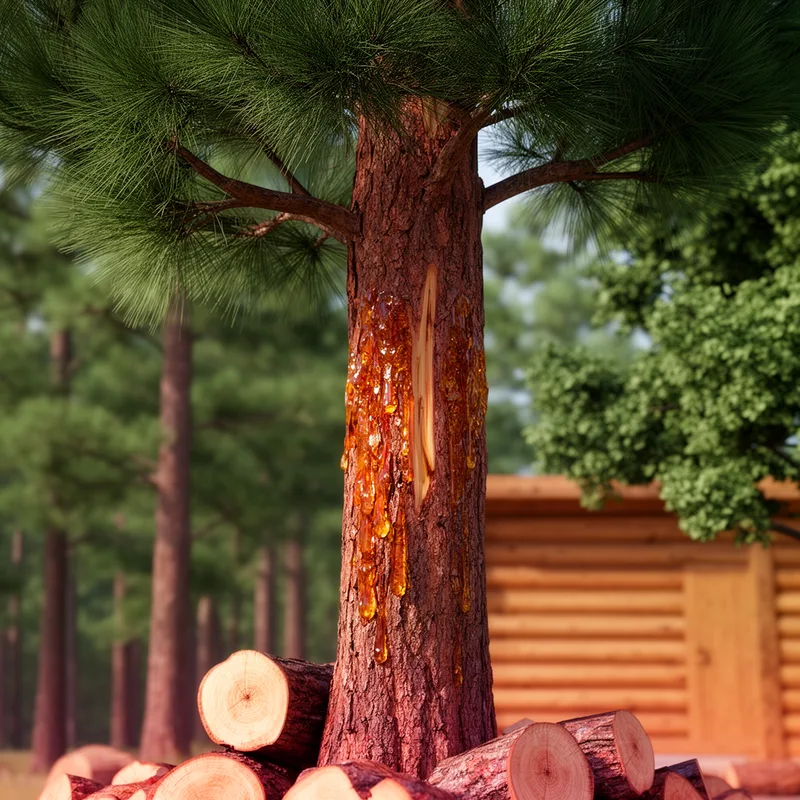
pitch pine


 1
5.8
1
5.8
- noun
- /pɪtʃ paɪn/
- Specialized
- The pitch pine is renowned for its sturdy wood and aromatic resin, making it valuable in construction.
- pitch pine forest
- oak and pitch pine
Examples
-
Each morning, we would then track them down on their roosts, and the birds I found were almost always way at the top of a pitch pine (or oak before the leaves dropped) and difficult to see.
Blog text (27) -
Henry David Thoreau built his cabin from pitch pine in the serene woods near Concord, Massachusetts.
-
In those days they would've used pitch pine torches.
-
Windswept and relatively dry, with poor and shallow soils, such zones are dominated by short and usually gnarly bear oak and pitch pine.
Academic text (2011) -
To the west, the sun burnt its way through the pitch pines and birches where final hillocks of snow clung in darkness to matted leaves.
Fiction book (2002) -
Bear oak and pitch pine are the dominant trees, usually associated with bigtooth aspen, gray birch, mountain laurel, mountain maple, paper birch, and sassafras.
Academic text (2011) -
This region's pitch pine trees provide vital habitats for various wildlife species and thrive in sandy soil.
Synonyms

A large pine tree with groups of three needles that grows in eastern North America

A large pine tree from eastern North America with three needles in each cluster and thick, rough bark
Surface Forms
Morphology
The compound is compositionally built from 'pitch' (a resin/tar-like substance) + 'pine' (a tree), so a learner can infer it denotes a pine associated with pitch or resin. This modifier–noun formation follows ordinary English compounding patterns and is cross-linguistically common, making the meaning transparently derivable from the parts.
Etymology
Pitch pine is named for the sticky sap called pitch that the tree makes and the word pine for the tree. Early builders used that pitch to seal ships and roofs, so the name means 'a pine tree that produces pitch'.