

English
 492
1.0
492
1.0

- adjective
- /ˈɪŋɡlɪʃ/
- Findings showed a significant difference between groups in math and English scale and performance level scores.
- English language
- English proficiency
- an English learner
Loading YouTube…
Watch on YouTubeAnd it also includes a quick, plain English description of each fund.
- And it also includes a quick, plain English description of each fund.
- And I said, but it was an English voice heckling me.
Examples
-
Now, I would like to introduce you to the new English teacher, Miss Campbell.
-
You know what the two best words in the English language are?
-
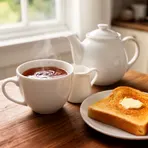
Er, can I get a full English breakfast too, please?
-
Apparently, the participants held positive attitudes toward the English language program they follow.
Academic text (2011) -
The challenge of meeting the new standards is especially severe for English language learners.
Academic text (2011) -
Sarah Schuetze is a Ph.D. candidate in the English Department at the University of Kentucky.
Academic text (2011) -
April's parents had somehow succeeded in creating access to English literacy despite their own limited English skills.
Academic text (2011) -
English speakers only.
-
The first group was composed of students with various levels of English proficiency enrolled in ESOL classes.
Academic text (2011) -
He is studying for his English exam next week.
Synonyms
 21
1.9
21
1.9
A person, country, or community that can speak English
 1
5.8
1
5.8
About people or places where English is the main language
Idioms

Compounds

 51
1.0
51
1.0
A language spoken in the UK, the US, and many countries and used worldwide for communication

 10
3.0
10
3.0
A college or university teacher who teaches English language and literature
 9
2.6
9
2.6
A narrow part of the sea that lies between southern England and northern France
 6
2.8
6
2.8
A part of a college or university that teaches English language and literature
 6
2.0
6
2.0
English spoken and written in the United States with its own words, spelling, and accents


- Literature
4
9.9
An early form of the language spoken and written in England and southern Scotland before about AD 1100

A very large dictionary that shows the history and meanings of English words published by Oxford University Press


 1
7.9
1
7.9
Standard British English that educated people use and most people see as correct

 1
8.6
1
8.6
A way of speaking English heard at Oxford University that sounds formal and showy
 1
3.1
1
3.1
A sturdy, medium-sized dog with a wide face and short coat often kept as a pet
 1
6.0
1
6.0
A war in England from 1642 to 1651 between supporters of Parliament and the king that temporarily ended the monarchy

 1
7.7
1
7.7
Standard British English spoken by educated people, especially in southern England and by the royal family

- Archaic
1
3.4
A simplified form of English that uses a small set of common words for international communication

- Specialized
1
6.9
A form of American English with its own grammar and words, often spoken by African Americans
 1
4.4
1
4.4
A dog from England with long silky white hair and spots that people use to hunt birds

- Jargon

 1
9.0
1
9.0
A movement of your body after throwing or hitting a ball to change its direction



 1
3.4
1
3.4
A medium-sized dog with a black-and-white or brown-and-white coat used for hunting and bringing back birds
 1
3.9
1
3.9
A climbing evergreen vine with lobed green leaves and small black berries often grown in gardens
 1
6.1
1
6.1
A 1688 change in England's rulers that made William and Mary king and queen
 1
5.3
1
5.3
A large strong dog with a long shaggy grey and white coat used for herding sheep

- Specialized
A way of speaking English with its own grammar, sounds, and words used by many African Americans

- Specialized
A variety of American English many Black people speak, with different pronunciation, grammar, and words

- Archaic
A custom in England long ago where the youngest son inherits family land

The usual spelling and rules used in the UK and many Commonwealth countries, different from American spelling

The way words are spelled in the United Kingdom, for example colour and theatre

- Slur
English spoken in the Philippines with a strong local accent and different grammar

- Canadian
A form of English spoken and written in Canada with different pronunciation and spelling

- Canadian
A set of spellings used in Canada that mixes British and American forms

- Canadian
English spelling used in Canada that combines British and American forms

The spelling used in the UK and many Commonwealth countries, for example colour and centre

Way of writing English words used in the UK, Ireland and many Commonwealth countries, different from American English

A part of a school or university that teaches and studies English language and literature


- Specialized
A saddle with a metal back and front used by soldiers on horseback without a horn

A small, lively dog with long silky ears and wavy hair often kept as a pet

A six-sided instrument with rows of buttons that you play like a small accordion

A small low-growing plant with a yellow centre and white or pink petals often in lawns


A thorny shrub with white or red flowers and bright red berries used for hedges

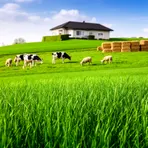
A grass from Europe that lives for many years and is grown for pasture, hay and lawns

- US
A flat fish from the Pacific coast of North America often eaten for its mild, tender flesh



A type of dog with a black and white coat that helps hunters by finding and bringing game

- Specialized
A system of measurement using units like the foot, pound, and pint that is used mainly in the United States

Small British dog with long soft fur, a round head, and a short turned up nose

A plant that grows from a bulb with large delicate flowers in many colors except yellow




A common wild plant with long narrow ribbed leaves that grows in lawns and roadsides

A small European plant with pale yellow flowers that blooms in spring and grows in gardens


A nut with a wrinkled two-part seed inside a hard thin shell used in cooking and baking


- Specialized
A style of church and cathedral building from 14th–15th century England with tall lines, Tudor arches, and fan-shaped stone ceilings
Surface Forms
Morphology
Etymology
English comes from the name of a people, the Angles, and originally meant 'of the Angles'. So when we call the language or its use English, we mean it belongs to the speech that came from those people.