

English Revolution


 1
6.1
1
6.1
- noun
- HiLobrow is pleased to present the sixteenth and final installment of our serialization of Edward Shanks' The People of the Ruins: A Story of the English Revolution and After.
Examples
-
If the English Revolution was achieved in America, one of the hopes of the French Revolution was realized in New York's art world—careers open to talent, open even to those who just loved art as part of the Creation.
Academic text (1998) -
This studies the importance of the English Revolution in world history through a reexamination of literary and dramatic material as well as parliamentary documents and manifestos.
Academic text (1991) -
It's what is the English Revolution, you ask?
-
Jews behind the English Revolution explain many things.
Blog text (5) -
The English Revolution plays almost no role in English consciousness.
Academic text (2005) -
When the English Revolution occurred in 1688, Oglethorpe was not yet born, and Lord Egmont was only four years old.
Academic text (2007) -
While the latter was not a direct organ of the state, it wasn't difficult to see which way the wind was blowing, especially in the aftermath of the English Revolution.
Academic text (2011) -
The founding of the United States was one of the "classical liberal" movements of the seventeenth and eighteenth centuries in the Western world, specifically from the English Revolution of the seventeenth century.
Blog text (25) -
Arguably the most important of these was the English Revolution—not so much because it brought William and Mary to the throne, but because Parliament effectively asserted its sovereignty for the first time by deposing James the Second and declaring itself "the crown" until such time as a new monarch was chosen.
Blog text (6) -
The English Revolution, also known as the Glorious Revolution, marked the transition of power from James II to William III and Mary II in 1688.
Synonyms
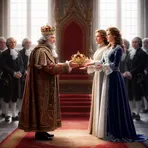
The change of rulers in 1688–1689 that puts William and Mary on the throne with little violence

The removal of King James II in 1688 that makes Parliament stronger and limits the king
Surface Forms
Morphology
The meaning is compositionally derived: 'English' (pertaining to England) modifies 'revolution' (an important overthrow/change), so a learner who knows both words will infer it refers to a revolution in England. This modifier+noun pattern is cross-linguistically common; while a learner may not know the specific historical event (the Glorious Revolution), the core semantic relation is immediately understandable.
Etymology
English Revolution refers to the sudden change in England in 1688–1689 when King James II was replaced by William and Mary with little fighting. Because this event moved real power from the king to Parliament and changed how the country was run, people call it a 'revolution'.