

English violet
- noun
- She picked a bouquet of English violet from the woodland edge.
Examples
-
The English violet produces fragrant flowers in early spring.
-
Gardeners often plant English violet for its lovely scent and ground cover.
-
The English violet blooms in early spring.
-
I found an English violet in my garden.
-
In spring, the garden was filled with blooming English violets that attracted many bees.
-
She arranged a bouquet with bright English violets and admired their delicate petals.
-
The sweet scent of English violets filled the air during the early morning walk.
Synonyms

 23
1.0
23
1.0

A small flower with leaves shaped like hearts and purple petals
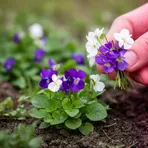
A small plant with purple or white flowers that smell sweet
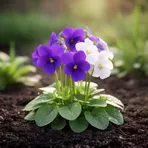
A small violet with purple or white sweet smelling flowers often grown in gardens

A small plant with purple or white flowers that grows in gardens
Surface Forms
Morphology
The compound is a straightforward adjectival noun phrase: 'English' (pertaining to England) modifies 'violet' (a small perennial plant), so the meaning — a violet associated with England or an English variety — is directly derivable from the parts. This is not idiomatic or metaphorical and follows a common cross-linguistic pattern, so a B1 learner who knows both words will understand it.
Etymology
English violet is the name of a small, sweet-smelling flower that grew widely in England. The part violet points to its purple-colored flowers and the part English shows where it was common, so the name now means this particular species of violet.