

to wind down
 39
3.7
39
3.7

- phrasal verb
- /waɪnd daʊn/
- Informal
- If it's light stretching, something that just helps you disconnect and wind down is, is a really good piece of advice.
- begin to wind down
- war winds down
- Cold War winds down
Loading YouTube…
Watch on YouTubeAnd one of the best ways to wind down is through your breath.
- And one of the best ways to wind down is through your breath.
- The banks could have been wound down, as they were supposed to be.
- So Viet Vietnam was winding down by the time I graduated.
- Just because you're winding down to bed doesn't mean you should let your guard down.
- By the time they do that, they're kind of winding down in a presidency.
- And she had a sense that her life was winding down.
- And it's, I realize that it's more of a ritual and it's like a winding down kind of moment.
- Quick question, Shane M, what do you do to relax or wind down Michael?
- So a lot of them are sort of also slowly retiring and winding down their business.
- And as you go through school, you wind down until you get to the exit and you are set free.
- So I've been going to, you know, like since the pandemic started winding down and we started going back to the dentist.
Examples
-
The evening tradition here is to wind down with a cup of coffee.
-
Headspace has wind down sessions their members swear by.
-
I mean, you do need to wind down just a little.
-
Maybe we should do something to wind down.
-
You know, just to sort of wind down.
-
Well, I think Dad has made some excellent progress today but I think it's time we wind down now.
-
For the past fifteen years, this is where we wind down from a rough weekend and prepare for another week.
-
Do you have any particular wind down routines or rituals at night?
-
All right, so I'm winding down day one with the Pixel and so far pretty good.
-
After a long day at work, I like to wind down by reading a book.
Synonyms
 ∞
1.0
∞
1.0
To feel less nervous and more calm
 594
1.4
594
1.4
To become less angry, excited, or upset
 496
1.4
496
1.4
To stop doing something for a short time to rest or relax before continuing
 99
4.9
99
4.9
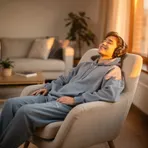
To relax and become calm after you feel upset
 57
3.7
57
3.7
To make something less strong or strict
 56
2.5
56
2.5
To become quiet and calm after being excited
 55
6.2
55
6.2
To calm down and stop being angry or excited
 50
2.7
50
2.7
To become calmer, less angry, or less hot
 46
2.7
46
2.7
To become less strong or loud over time
 42
2.0
42
2.0
Make people or things less noisy and less active
 35
3.4
35
3.4
Become relaxed and less tense after work or a stressful time
 32
3.7
32
3.7
Pause to breathe normally after hard exercise or a shock
 25
2.6
25
2.6
To take a short break to rest
 24
3.2
24
3.2
Stop what you are doing to rest or do something different for a short time
 19
2.5
19
2.5
Feel less angry or excited
 14
4.1
14
4.1
To become calm after strong feelings or to tell someone else to calm down
 14
3.5
14
3.5
To stop and rest for a short time
 14
3.5
14
3.5
Do something active, like go for a run, to feel less angry or stressed
 13
5.5
13
5.5
To sit down and rest after standing or working
 11
4.2
11
4.2
Relax and become less tense after work or stress
 10
6.3
10
6.3
Become more relaxed and easygoing
 9
4.0
9
4.0
To become gradually less strong or severe
 5
3.4
5
3.4
To feel relaxed and relieved after a worrying time
 2
8.6
2
8.6
Calm down and relax after feeling stressed or excited


 1
2.7
1
2.7
Relax and feel less stressed after work

To relax and become less active after a busy time
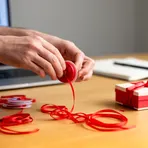
To unroll something or slowly finish a task
Antonyms


How Relaxed

Surface Forms
Morphology
The meaning 'to relax or come to an end gradually' is partially inferable because 'down' conveys reduction/ending and 'wind' can evoke winding down/unwinding, but the specific phrasal sense is metaphorical and not directly predictable from the literal constituent definitions. This pattern is semi-compositional and learners often need exposure to capture the idiomatic nuance.
Etymology
The phrasal verb wind down may come from old clocks. When you turned a key to wind a clock, the spring made it run, but when the spring ran out the clock would wind down and slow to a stop, so the phrase now means 'to relax' or 'slowly come to an end'.