
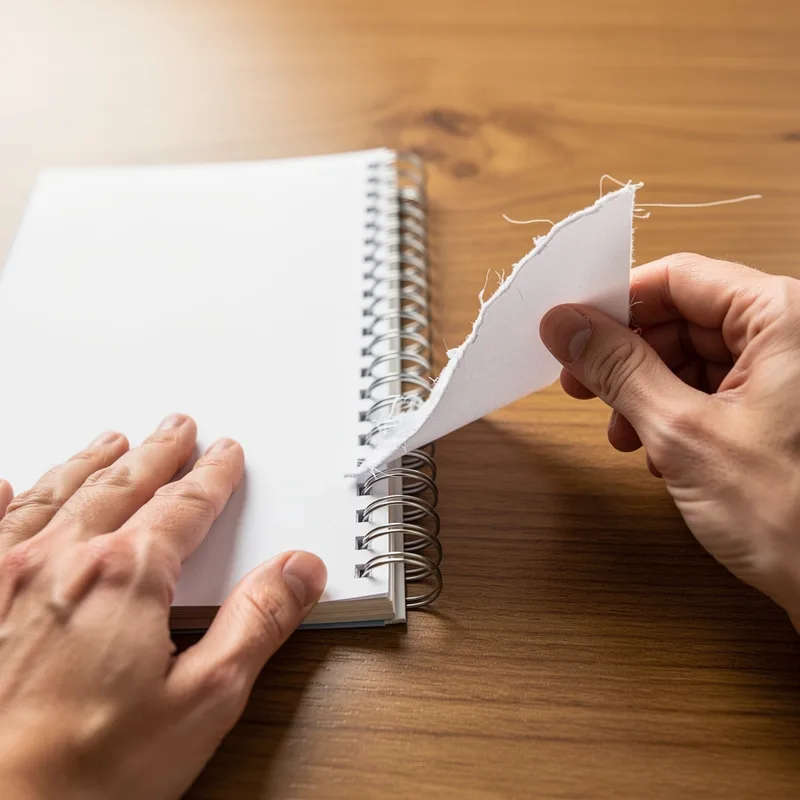
to tear out
 24
4.8
24
4.8

- phrasal verb
- /tɛr aʊt/
- Second thing is that the table that was here, I didn't like it so I tore it out and it's currently over there.
- tear out the page
- tear out your hair
- tear out your heart
Loading YouTube…
Watch on YouTubeThen we just go with the traditional ones and we tear those strips out.
- Then we just go with the traditional ones and we tear those strips out.
- All of the walls, flooring, baseboards, like everything had to be torn out.
- And it allows the these very, very sort of dark and powerful people to to I think, tear the heart out of our country.
- And so my mom said the the soldier opened the book and says no picture of Arafat on this page and tore the page out and threw it at him.
- Feeling like you're crawling out of your skin in a social setting for which the only remedy is to leave immediately and tear out your hair extensions?
- He had sex shops and a mail order business, which was like literally tearing a coupon out of a magazine and posting off what you wanted.
- So tape measure pine cone paper and pencil paper in a pad that we can use either to write on or to to tear out.
- Like if you love that open shelving look, you don't have to tear out your entire kitchen, take the doors off of your shelves right Open.
- So subsequently, the, the person which that personality inhabited was captured and interrogated, tortured, you know, had their fingernails torn out.
- And you can tear that out just like you can copy and paste from Stack Overflow that.
Examples
-
The first pitch has yet to be thrown and already Leonard Huff is tearing his hair out.
-
She decided to tear out the old pages from her notebook to make space for new notes.
-
Hey, you tore out the pages.
-
When the police returned it, there were pages torn out.
-
Together, they barrel through the soft paper wall and tear out an escape route.
Fiction book (1997) -
I'm going to tear these pages out.
-
If he wants it gone‚ he'll have to tear it out.
-
And you can tear that out just like you can copy and paste from Stack Overflow that.
-
He had to tear out the damaged section of the drywall before making repairs.
-
To fix the plumbing issue, they will need to tear out the floorboards in the bathroom.
Synonyms
 ∞
1.0
∞
1.0
To move something toward you using force, often to remove it
 ∞
1.5
∞
1.5
To move something or someone away from a place
 ∞
1.0
∞
1.0
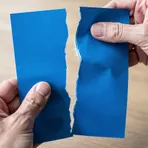
To pull something so it breaks into pieces
 948
1.9
948
1.9
To remove something from a place or container
 523
2.7
523
2.7
To take something out of a place, often with effort
 166
3.9
166
3.9
To remove something from somewhere, often by effort, or to get information
 111
3.2
111
3.2
To take something out, often with effort, for example weeds or hidden facts
 80
4.5
80
4.5
To pull something away quickly and roughly
 77
3.5
77
3.5
To pull something out quickly with the fingers
 77
3.2
77
3.2
To remove a shape from paper or cloth using scissors
 68
4.4
68
4.4
To pull something out quickly and with force, often to remove it completely
 41
2.7
41
2.7
To take something off from where it is attached
 18
3.8
18
3.8
Remove something from where it is, for example a nail or a secret
 16
4.5
16
4.5
Pull something out of a place by using air to draw it in
 14
7.2
14
7.2
To cut out part of a body or text
 12
3.0
12
3.0
To pull something off quickly until it rips
 10
8.7
10
8.7
To pull something apart with great force
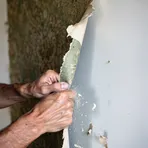 6
4.5
6
4.5
To pull something off quickly with force
 6
4.2
6
4.2
To push something out with effort or pressure
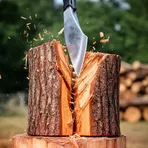
To split something violently with a sharp tool

Pull something away suddenly with great force
Antonyms


How Forceful

Surface Forms
Morphology
The meaning 'to remove something forcefully or with effort' is directly composed from 'tear' (to pull or rend apart) plus 'out' (away from the interior), so a learner who knows both words can infer an outward removal. This verb+particle pattern is a common, largely literal construction in English and is cross-linguistically familiar, making it transparent to a B1 learner.
Etymology
The verb tear out comes from the simple image of ripping something away—someone might tear a page out of a notebook or pull a damaged tooth out. Because it shows a strong pull, it now means 'to remove something forcefully' or 'to pull information or objects out'.