

to crumble
 177
3.4
177
3.4

- verb
- /ˈkrʌm.bəl/
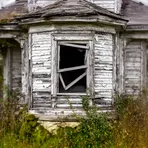
- The old building began to crumble after years of neglect.
- begin to crumble
- crumble apart
- a crumbling building
Loading YouTube…
Watch on YouTubeAnd eventually it would crumble and and cease to exist.
- And eventually it would crumble and and cease to exist.
- So why doesn't our jaw just crumble under all of those forces?
- So I saw the, I saw the band crumble, but they were still Aerosmith.
- O failure of the five to grasp the depth in crumbling curb and garden step.
- Some people crumble when people are harsh with them.
- You know, a Stonewall crumbles, wood fences, you know, decay.
- But if, if, if everything crumbles in life, you still have love.
- I mean, impossible demands and, and crumbling under the pressure.
- And I was like, Oh my God, it's all crumbling at this moment.
- Like it's like crumbled Heath that is super good as well.
- OK, If those loans now crumble, they're not worth anything.
Examples
-
Paper and packing materials crumble beneath them and scatter across the floor.
Fiction book (1990) -
The whole operation crumbled.
-
I am kind of scared that my units will crumble, but not so scared.
-
And it's like, yo, so many people crumble in that moment.
-
Some people crumble when people are harsh with them.
-
Either we heal as a team... ...or we're gonna crumble.
-
So that's going to crumble under the pressure right there.
-
But you have to understand, Matthew sees his world as crumbling all around him.
-
Their education today takes place in a crumbling and corrupted public system.
Academic text (1999) -
Society was crumbling.
Synonyms
 ∞
1.0
∞
1.0
To change a large bill into smaller bills
 579
3.9
579
3.9
To fall down suddenly, for example when a person faints or a building breaks
 194
3.2
194
3.2
To stop working because of a problem
 155
2.8
155
2.8
To break into pieces or stop working properly
 83
4.2
83
4.2
Gradually make someone's trust, belief, or support weaker over time
 72
2.8
72
2.8
To break suddenly into many small pieces, like glass
 66
2.7
66
2.7
Separate something into smaller pieces
 44
3.1
44
3.1
To break into pieces or fall into separate parts
 38
4.3
38
4.3
To come apart into threads, like a rope or cloth
 37
4.4
37
4.4
To slowly fall into ruin because of age or neglect
 35
5.8
35
5.8
Fall apart into smaller pieces or stop working together
 30
4.4
30
4.4
To collapse inward, as a roof or organization breaking down
 26
3.0
26
3.0
To separate into pieces, for example a machine or a group
 22
3.9
22
3.9
Suddenly fall down because something is weak or hit hard
 22
3.7
22
3.7
Suddenly fall inward because its sides or top become weak, for example a tunnel
Phrasal Verbs

How Broken

Surface Forms
Morphology
Etymology
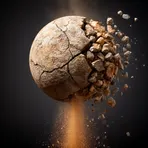
Crumble comes from the simple word crumb, which means 'a very small piece' of bread or cake. It originally meant 'to break into small pieces', so when something crumbles it falls apart or loses strength like a cookie breaking into crumbs.