
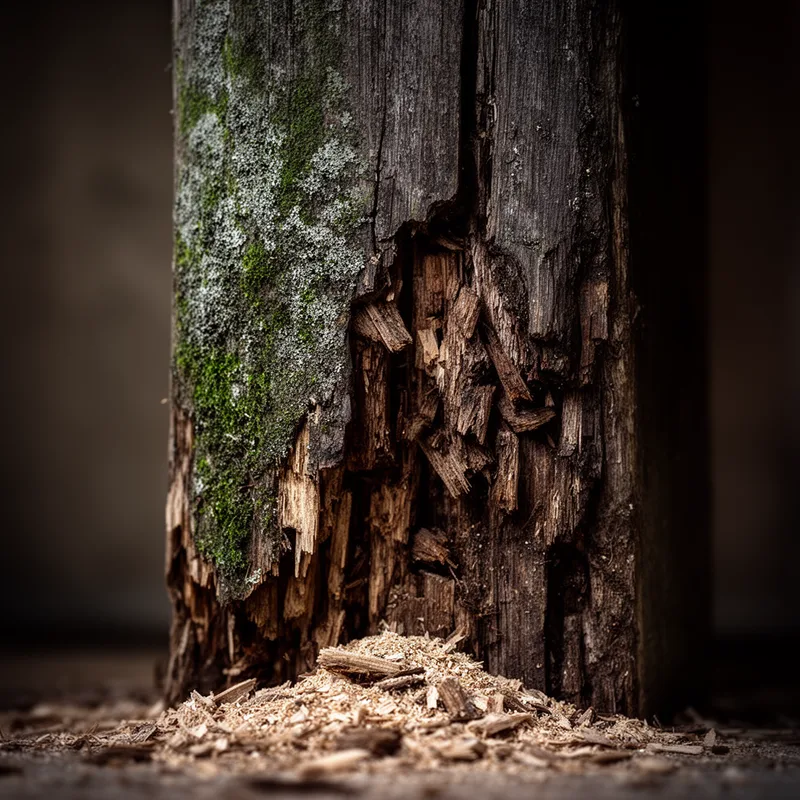
to rot away
 16
4.2
16
4.2

- phrasal verb
- /rɑt əˈweɪ/
 :
pudrirse
:
pudrirse
- Later in life, you'll just start to rot away.
And they go out and they stumble around in tyranny and famine and self betrayal and and violence and, but it's a hell of a lot better than just rotting away at home.
- And they go out and they stumble around in tyranny and famine and self betrayal and and violence and, but it's a hell of a lot better than just rotting away at home.
Examples
-
The old wooden fence has started to rot away after years of neglect.
-
The dish cabinet had more or less rotted away.
-
"Have you ever seen someone you love just rot away before your eyes?
Fiction book (1995) -
I'd rather be dead out there than rotting away in here.
-
It's just gonna rot away in those catacombs.
-
My old Penn State hat's still rotting away in the back of the car.
Blog text (26) -
The others will slowly rot away and die in gradual agony.
-
Oh, to know that you're alive, Your Honor, instead of rotting away in some lonely grave.
-
Across the poor African country, hundreds of thousands of tonnes of maize are rotting away or being destroyed.
Blog text (33) -
You can jog and peel, and nip and tuck, but your insides are still rotting away.
Synonyms
 146
5.9
146
5.9
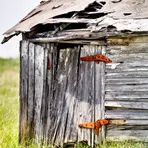
To get worse in quality, condition, or value
 83
4.2
83
4.2
Gradually make someone's trust, belief, or support weaker over time
 37
4.4
37
4.4
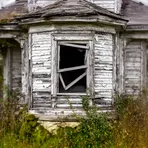
To slowly fall into ruin because of age or neglect
 37
4.4
37
4.4
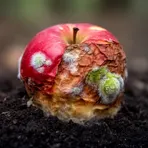
To change dead plants and animals into simpler parts with help from bacteria or fungi
 35
5.1
35
5.1
To wear away soil and rock by wind or water
 32
2.1
32
2.1
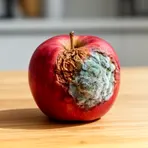
Become unsafe to eat or use because it has spoiled
 30
1.6
30
1.6
To go bad and not be safe to eat
 17
4.1
17
4.1
Slowly damages metal, rock and someone's confidence by chemicals or steady pressure
 9
9.9
9
9.9
To go very badly and fail completely
 7
5.5
7
5.5
To become weak and thin because of sickness or not eating enough
 7
6.6
7
6.6
To be completely ruined and lose all value
 4
4.0
4
4.0
Start to break into pieces or stop working well
 1
8.3
1
8.3
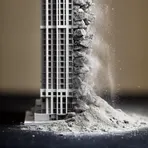
To slowly fall apart and disappear over time

To make wood or other plant material decay because of a fungus that grows in dry wood

To become worse slowly in a calm, controlled way without sudden failure
Antonyms

How Decayed

Surface Forms
Morphology
The meaning 'to decay or be gradually destroyed' is directly and predictably built from 'rot' (to decompose) plus the particle 'away' (to disappear/diminish), so a B1 learner who knows both words can infer the gradual loss sense. The verb+particle pattern with 'away' signalling diminution or disappearance is common in English (and parallels exist in other languages), supporting a transparent classification.
Etymology
The phrasal verb rot away comes from a simple image: wood or food left in a wet place will rot and slowly wear away until it is gone. That's why rot away now means 'decay' or 'be gradually destroyed'.