

atomic
 50
3.9
50
3.9

- adjective
- /əˈtɑːmɪk/
- Specialized
- The atomic theory provides a fundamental explanation for the composition of matter.
- atomic nucleus
- atomic structure
- atomic physics
Loading YouTube…
Watch on YouTubeThat's the floor, or rather the atomic bonds in the floor and in the ground below.
- That's the floor, or rather the atomic bonds in the floor and in the ground below.
- Well, looks like it somehow got transmuted on the atomic level into oxygen.
- They'd radiate, lose energy, and plunge into the atomic nucleus.
- OK, that is about the same magnitude as the width of an atomic nucleus.
- So today we are building molecular machines versus atomic machines.
- These are the atomic bonds and the molecular bonds that create solid objects.
- Because neutron stars are super dense objects, they are like giant atomic nucleuses.
- This forces electrons into the atomic nuclei, where they turn protons into neutrons.
- So the dark matter fluctuations tend to attract more dark matter and the atomic matter follows that.
Examples
-
For example, diffusion along atomic rows and across them can be expected to be different.
Academic text (1993) -
OK, now what gives atomic orbitals their shape?
-
And at the atomic level, the energy levels are much higher.
-
And the energy in atomic units is not one.
-
We know that it's atomic in nature.
-
And what could be more precise than the atomic scale?
-
The atomic number of zinc is 30.
-
Plane waves do not depend on the atomic positions, so using them makes the results more precise.
Academic text (1999) -
But we can keep zooming even further to the centre of the atom, the atomic nucleus.
-
Planck's constant is a fundamental part of the study of atomic and subatomic processes in atomic physics.
Academic text (1991)
Idioms

Compounds
- Specialized
66
2.3
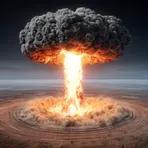
A very powerful weapon that splits atoms to make a huge explosion and destroy large areas
 11
3.5
11
3.5
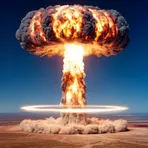
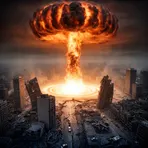
A very powerful explosive that uses energy from splitting or joining atoms to destroy things


An international organization that helps countries use nuclear energy safely and peacefully
 4
4.2
4
4.2
A former United States government agency that oversaw nuclear energy research and civilian use


- Specialized
2
3.9
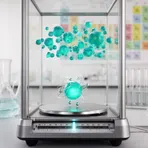
The average mass of the atoms of a chemical element, measured in atomic mass units
- Specialized
1
3.4
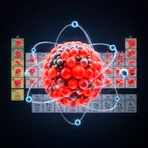
Number of protons in an atom's center that shows its place in the periodic table
- Specialized
1
3.6
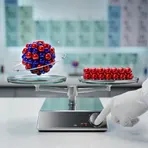
A number that tells how heavy one atom of an element is in atomic mass units

- Specialized
1
4.3
A machine that splits atoms to make energy for electricity or research

- Specialized
1
3.6
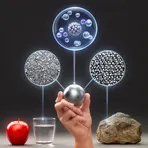
A scientific idea that all matter is made of tiny particles called atoms

- Specialized

 1
6.0
1
6.0
A pattern of lines in light made when atoms take in or give off energy, showing which element it is


- Informal
A strong mixed drink made with more than one kind of alcohol and bright layers


- Specialized
A radioactive metal made by shooting neutrons at plutonium in a lab

- Specialized
A radioactive metal element called nobelium with atomic number 102 that scientists use only for research
- Specialized
A radioactive element called lawrencium that scientists make in a lab


- Specialized
A man-made radioactive chemical element called rutherfordium with symbol Rf

- Specialized
A soft white metal found in rare earth minerals, used in special glass and camera lenses


- Specialized
A soft metal called neodymium from the rare earths used in strong magnets and lasers


- Specialized
A soft silver metal from the rare earth group that is radioactive and has no stable forms


- Specialized
A silvery metal called samarium that is used in powerful magnets and electronics
- Specialized
A silvery-white chemical element used in magnets and medical imaging

- Specialized
A rare earth metal called holmium that helps make very strong magnets

- Specialized
A metal found in minerals and used in some lasers and glowing materials


- Specialized
A colorless, odorless gas that makes up most of the air and is needed by living things


- Specialized
A rare metal element called lutetium that is often found with yttrium


- Specialized
A heavy, rare metal used in strong metal mixtures and often found with platinum

- Specialized
A heavy, valuable grey-white metal that resists corrosion and is used for jewelry

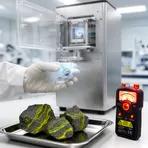
- Specialized
A radioactive metal called polonium that is found with uranium and used in some devices


- Specialized
A very rare radioactive element that breaks down quickly and is called astatine


- Specialized
A radioactive metal called radium that appears in small amounts in uranium ores

- Specialized
A radioactive metal element called protactinium often made when uranium breaks down

- Specialized
A heavy radioactive metal used as fuel in nuclear reactors and in weapons
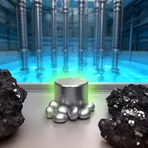
- Specialized
A radioactive metal called neptunium found in uranium ores and nuclear reactors


- Specialized
A radioactive metal called einsteinium with atomic number 99 made by hitting plutonium atoms with neutrons

- Specialized
A man-made radioactive heavy metal element called hassium with atomic number 108
- Specialized
A very heavy radioactive metal that scientists make in labs and has atomic number 109
- Specialized
A man-made chemical element named darmstadtium with 110 protons used only in research
- Specialized
A radioactive metal element called roentgenium whose atoms have 111 protons

- Specialized
A very heavy radioactive metal made by scientists and named copernicium
- Specialized
A man-made radioactive element named nihonium with atomic number 113

- Specialized
A very heavy man-made element called flerovium with atomic number 114

- Specialized
A very heavy chemical element made in a lab that breaks down quickly

- Specialized
A radioactive element named livermorium with symbol Lv that has 116 protons in its atoms
- Specialized
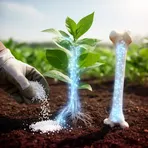
A chemical element used in fertilizers and found in plants and bones

- Specialized
A poisonous yellow-green gas used to kill germs and to bleach things
How Small
- Specialized
27
6.3

- Specialized
1
8.2
- Specialized
50
3.9
- Specialized
126
4.6
- Specialized
6
5.3
- Specialized
4
5.6
Surface Forms
Morphology
Etymology
The word atomic comes from the Greek atomos, which means 'not cut' or 'indivisible' and comes from a- 'not' and tomos 'cut'. Because early scientists thought atoms were the smallest uncut pieces of matter, atomic now means 'relating to atoms'.