

atom
 170
3.5
170
3.5

- noun
- /ˈætəm/
- Specialized
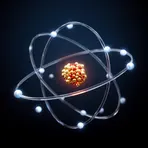
- An atom is the fundamental building block of matter, consisting of a nucleus surrounded by electrons.
- electrons per atom
- atoms and molecules
- hydrogen atom
Loading YouTube…
Watch on YouTubeIf that space is expanding, why isn't the atom also expanding?
- If that space is expanding, why isn't the atom also expanding?
- The tiny particles that orbit the nucleus of atoms, Particles.
- So the question is, why are atoms so empty?
- It's a compound of two atoms or elements.
- It's because while gold feels solid, its atoms are mostly empty space.
- A clock the size not just of an atom, but of an atoms nucleus.
- The first one was that when helium atoms touch each other, they repel.
- So maybe even more basic, what is an atom and what is an electron?
- Well, it comes from the way that those atoms are arranged.
- You can almost see the atoms vibrate like you are that there.
- Now molecules are multiple atoms bonded together.
Examples
-
Of course, they say every atom in our bodies was once part of a star.
-
It's because while gold feels solid, its atoms are mostly empty space.
-
But what happens at the single atom level, nobody knows until now.
-
Sure enough, you fire the atoms through one at a time.
-
Remember the free electron moving from one atom to the other in the description above?
Academic text (2008) -
It actually happens for every atom in you or in me.
-
By exciting the atoms, we're able to create a fluid moment of chemical transition.
-
That's the case when I have N atoms in the chain.
-
But they're ultimately, you know, made of atoms just like the body is.
-
When electrons move among atoms, the basics are present for electrical conduction or current.
Academic text (2011)
Synonyms
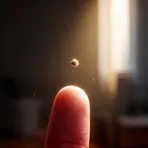
A very small part of matter like a tiny particle
Compounds
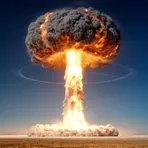
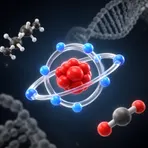
- Specialized
4
3.0
An atom with six protons and six electrons that is the main part of many molecules in living things

- Informal
2
6.0
A large machine scientists use to make tiny particles move very fast and hit each other
- Archaic
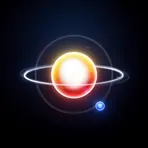
A model where an atom's positive charge and mass are in a tiny central nucleus and electrons orbit it
How Small

Surface Forms
Etymology
Atom comes from the Greek parts a- 'not' and tomos 'cut', so it originally meant 'uncuttable'. Early thinkers used it for the tiniest piece of matter, and that is why scientists call the smallest unit of an element an atom.