

molecule
 209
3.4
209
3.4

- noun
- /ˈmɑlɪˌkjul/
- Specialized
- A glucose molecule plays a crucial role in providing energy to living cells.
- atoms and molecules
- water molecule
- oxygen molecules
Loading YouTube…
Watch on YouTubeResearchers build a transistor from a molecule and a few atoms.
- Researchers build a transistor from a molecule and a few atoms.
- Ozone is a molecule made of three oxygen atoms.
- And the Krebs cycle pumps out a molecule known as ATP.
- Yeah, we've just done, we've just made a anti influenza molecule and some antivirals.
- So first, let's look at the sugar molecules contained in a Jelly doughnut.
- It interacts with all the molecules and.
- They can increase the frequency that molecules interact.
- Second to that is we release these molecules called myokines.
- I break the molecule part and break bonds.
- There are more molecules in a breath of air.
- So this would apply for a molecule or for a rocket ship.
Examples
-
Water is made up of two hydrogen atoms and one oxygen atom, forming a single molecule.
-
So let's assume this is a DNA molecule that is not helical yet.
-
Your hands and our molecules are certainly not the same.
-
With every cell, with every molecule, with every atom.
-
These are these large biological molecules that do amazing things.
-
And it's based on us, our own molecules, our own cells, our own genes.
-
One of these small molecules was penicillin.
-
Six molecules of water... plus six molecules of carbon dioxide... produces one molecule of sugar and six molecules of oxygen.
-
As you know, DNA is a helical molecule made-up of two strands.
-
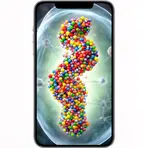
In chemistry, a molecule is the smallest unit of a chemical compound that can take part in a reaction.
Compounds
- Specialized
1
3.9
A long chain of amino acids that helps cells work and keep their shape

- Specialized
A molecule with one end always positive and the other always negative

- Specialized
A very large group of atoms joined together in a long chain like in proteins or plastics
How Small
- Specialized
170
3.5

- Specialized
209
3.4
- Specialized
10
6.5
- Specialized
447
4.2
Surface Forms
Etymology
Molecule comes from the Latin word moles meaning 'mass' plus the small ending -cule, so it literally means a 'tiny mass'. That's why a molecule today is a very small group of atoms — the smallest 'bit' of a compound that can take part in a chemical reaction.