

electron
 100
3.7
100
3.7

- noun
- /ɪˈlɛktrɒn/
- Specialized
- Electrons are essential for conducting electricity, as they carry the charge through the electron circuit.
- electrons in atoms
- electron charge
- electrons and protons
Loading YouTube…
Watch on YouTubeWe learned in physics that every electron is identical.
- We learned in physics that every electron is identical.
- The photons path is straight while the electrons path is curved.
- OK, so we want to calculate what electrons do in an atom.
- And moving electrons, that's current, as simple as that.
- You know, an atom is a nucleus with electrons flying around it.
- We start individual single electrons through the slits.
- So it's it's not just electrons, electrons, photons, anything.
- That's the only way that that the electron charge can be distributed.
Examples
-
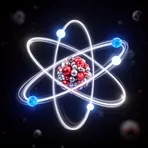
In an atom, each electron has a negative charge and orbits the nucleus.
-
A continuous supply of high-energy electrons was required, but none could be identified.
Academic text (1990) -
We learned in physics that every electron is identical.
-
We're building a machine to accelerate electrons.
-
When a substance or material has extra electrons, it is said to be negatively charged.
Academic text (2011) -
Silicon atoms have only four electrons in their outer shells.
Academic text (2011) -
Phosphorus has one extra electron in its outer shell that is not needed to bond with other atoms.
Academic text (2011) -
When heated, some materials can lose their electrons, allowing electricity to flow easily.
Synonyms

A very small particle with a negative electric charge that is part of atoms
Compounds

- Specialized
6
4.3
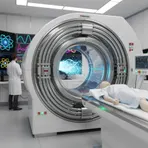
A machine that uses electrons instead of light to make very large images of tiny things
- Specialized
2
6.8
A machine that makes tiny particles inside atoms move very fast for experiments or medical treatment

- Specialized
1
4.6
A focused stream of tiny charged particles used to make images in special microscopes

- Specialized
1
4.7
A way of using a microscope and electrons to make very large pictures of small things like cells and viruses


- Specialized
1
6.3
A device that makes and focuses a thin beam of electrons in a television or microscope

- Specialized
1
4.9
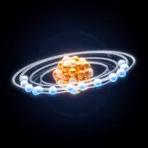
An electron not attached to an atom that can move freely and carry electricity
- Specialized

 1
4.8
1
4.8
A group of electrons that surround an atom's centre at the same energy level

- Specialized
1
6.5
A tiny particle in the outer part of an atom that can join with other atoms

- Specialized
A device that uses electric or magnetic fields to focus a beam of electrons


- Specialized
A device that makes a weak electric signal stronger by producing more electrons

- Specialized
The study of how electric and magnetic fields control electron beams

- Specialized
A method that uses microwaves to study how substances with unpaired electrons react to magnets


- Specialized
A technique using microwaves to study magnetic behavior of electrons in certain materials

- Archaic
A glass or metal device that controls electric current in old radios and televisions
How Small

Surface Forms
Morphology
electron = electric (semi-transparent) = electr + on
The form links to 'electric'/'electricity' so learners can see a relation to electricity, but '-on' and the specific sense 'subatomic particle' are technical coinages using Greek combining forms and are not fully predictable for average learners.
Etymology
The word electron comes from the Greek word ēlektron, which means 'amber'. Long ago, people found that rubbing 'amber' made a small electric charge, and the word electric comes from the same root. So the tiny charged particles inside atoms were named electrons because they carry electric charge.