
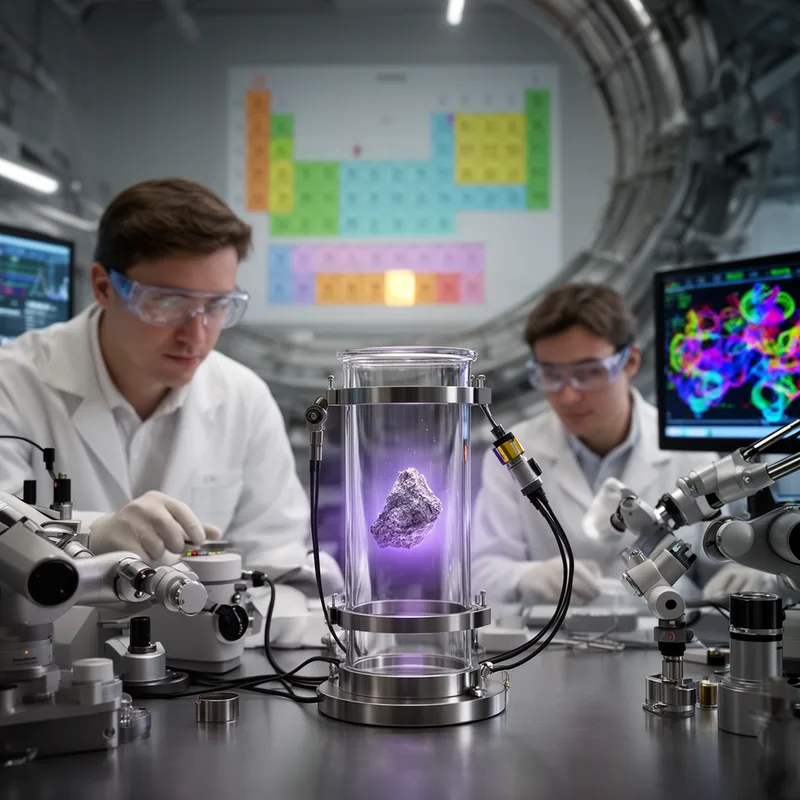
atomic number 102
- noun
- /əˈtɑːmɪk ˈnʌmbər wʌn ˈhʌndrəd tu/
- Specialized
- The element with atomic number 102 is nobelium.
Examples
-
Because atomic number 102 has no stable isotopes, it is used only in scientific research.
-
Researchers studied the behavior of atomic number 102 to understand its chemical properties.
-
Atomic number 102 was first identified in 1958 by a team of Swedish scientists.
-
Atomic number 102 is used in various scientific studies.
-
Atomic number 102 is known as nobelium and was discovered through the bombardment of curium with carbon ions.
-
Scientists often refer to atomic number 102 when discussing the properties of the element nobelium.
-
Atomic number 102 is a radioactive element that has no stable isotopes and is primarily used for research purposes.
Synonyms


 1
9.9
1
9.9
A metal made in labs that gives off radiation and has atomic number 102
Surface Forms
Morphology
The phrase is fully compositional: 'atomic' (relating to atoms) + 'number' (a numerical identifier) + '102' denotes the specific identifier, so a learner who knows the constituents can infer it refers to the element with atomic number 102. This follows a common scientific naming pattern (same logic in many languages), making the referent deducible without prior exposure to the specific element name.
Etymology
The term atomic number 102 names the element 'nobelium', which was first made in a lab by smashing atoms together in 1958. It is named after Alfred Nobel, and because its atoms have 102 protons, the label atomic number 102 tells you exactly which element it is.