

South American Indian
 1
5.1
1
5.1

- noun
- Archaic
- Stockton has spent much time with the South American Indian people studying their ancient mysteries.
Examples
-
Paco Ortega, the mastermind, sees in their widespread use of drugs the way the whites will finally destroy themselves and relishes the irony that cocaine comes from a plant cultivated by South American Indians.
Academic text (2002) -
We see the South American Indian men clearly now.
Fiction book (2001) -
This has been a recurrent idea through centuries of struggle between South American Indians and those who have sought to conquer, colonize, or convert them.
Academic text (1997) -
She's very young—a South American Indian—lying on a bed in a corner of one of the houses.
Fiction book (1996) -
Eighteen studies in South American Indian populations have shown a prevalence of Ascaris lumbricoides ranging from 3% to 99%.
Academic text (1996) -
Our Lives touches upon migration, the forging of international law on behalf of Native peoples, and international solidarities, all of which highlight south-of-the-border realities as well as the increasing links between North, Central, and South American Indians.
Academic text (2006) -
Some South American Indian cultures believe that a child's life can be influenced by objects that are buried with its placenta.
-
Religious practices among the South American Indian tribes vary greatly across different regions.
Synonyms
 161
3.4
161
3.4
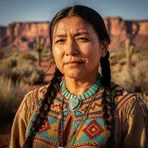
A person whose family lived in North or South America before Europeans arrived
 23
5.8
23
5.8
A people who built a large empire in Peru before the Spanish came
 2
7.6
2
7.6
A member of the first people who lived in a region
 1
7.9
1
7.9
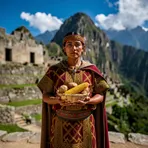
A person from the Inca people who lived near Cuzco in Peru
 1
9.9
1
9.9
A native people of the Andes, mainly in Bolivia and Peru, or their language
 1
9.9
1
9.9
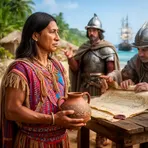
A Spanish name for a native person from the Americas used in colonial times


 1
7.3
1
7.3
A person whose family comes from the native peoples of North or South America
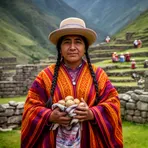
A person from the native people of the Andes who once ruled in the Inca Empire

A person from a native people in Peru who was once part of the Inca ruling class
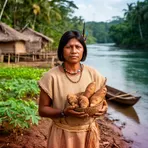
A person from a native group in northeastern South America and the Caribbean

A person from a native group in northeastern South America and nearby islands

A person from the native peoples of the Americas or a language they speak
Surface Forms
Morphology
The phrase is directly compositional: 'South' + 'American' + 'Indian' yields 'an Indian (indigenous person) from South America', so the overall meaning follows straightforwardly from the constituents. This demonymal/adjectival construction is cross-linguistically common and should be understandable to a B1 learner who knows the component words (context may be needed for cultural or historical nuance).
Etymology
South American Indian comes from a mistake by early European explorers. They thought they had reached India and called the people they met Indian, so the name came to mean someone who lived in South America before Europeans arrived.