
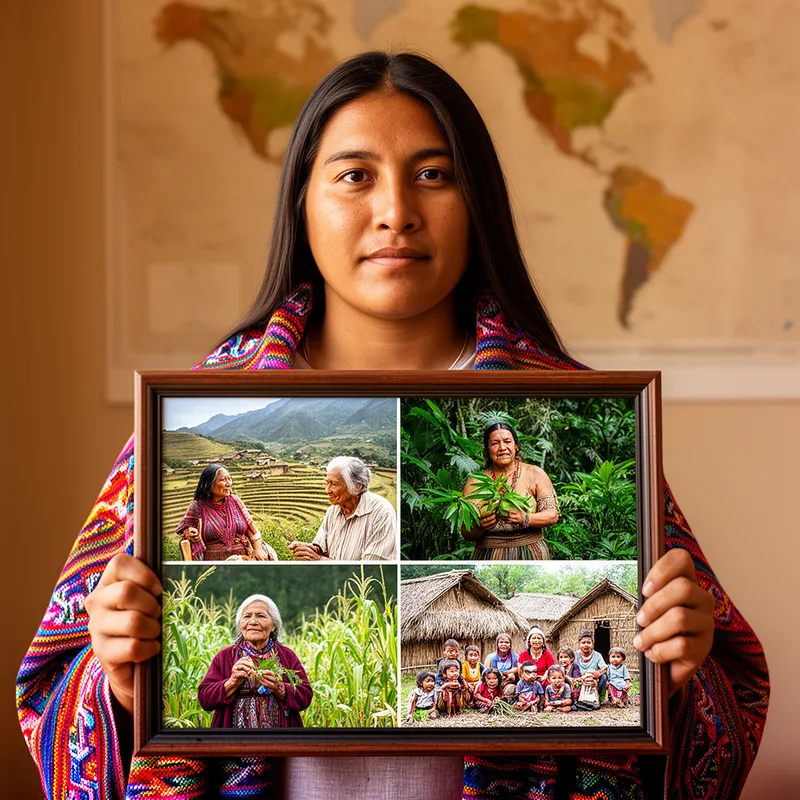
Amerindian


 1
7.3
1
7.3
- noun
- /ˌæməˈrɪndɪən/
- Moreover, Amerindians in particular were explicitly described by such thinkers as the pure, natural humans of the state of nature.
- Amerindians and Europeans
- encounters with Amerindians
- native Amerindian
Examples
-
One of Captain Pike's assignments was to escort the Amerindians back to their villages.
Academic text (2002) -
Witness what happened to the 'othered' Amerindians and you get the picture.
Blog text (12) -
I doubt that Amerindians remember the past as a libertarian paradise either.
Blog text (15) -
Foremost among these is the traditional study of Native American Indians, or Amerindians, depopulation and cultural destruction.
Academic text (1992) -
Landscape modification also occurred in more sparsely occupied areas, particularly through the Amerindians' use of fire.
Academic text (1992) -
Probably about 54 million Amerindians lived in the Western Hemisphere in 1492 (see Table 1 on page 20).
Academic text (1992) -
Some early modern thinkers, for instance, held that Amerindians were civil beings who led ordered and rationally comprehensible ways of life.
Academic text (1999) -
On July 15, 1806, Captain Zebulon Pike led a party of 23 soldiers and 51 Amerindians westward out of St. Louis, Missouri.
Academic text (2002) -
Amerindians used irrigation to expand or intensify cultivation on lands otherwise constrained by insufficient water supplies.
Academic text (1992) -
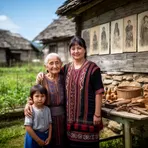
In a stunning landscape, the Amerindians continue to practice their ancient traditions and maintain a deep connection to the land.
Synonyms
 161
3.4
161
3.4
A person whose family lived in North or South America before Europeans arrived
 84
3.7
84
3.7
A person from the original people of a place, not later settlers
 4
8.6
4
8.6
A person from the first people living in a place before others arrived
 2
7.6
2
7.6
A member of the first people who lived in a region
 1
9.9
1
9.9
A Spanish name for a native person from the Americas used in colonial times
 1
9.4
1
9.4
A person native to a place where their family lived for many generations
Compounds

Surface Forms
Morphology
Amerindian = Indian (semi-transparent) = Amer + indian
Formed by adding the combining form 'Amer-' (from America) to 'Indian'; the geographic sense is inferable but 'Indian' is ambiguous and the combining form is not a standalone morpheme for learners.
Etymology
Amerindian combines Amer- (from American) and -indian (from Indian). Europeans once called the native peoples they met 'Indians' by mistake, so joining these parts gives a word for the original or native peoples of North and South America, which is why Amerindian means a member of the indigenous peoples of the Americas.