
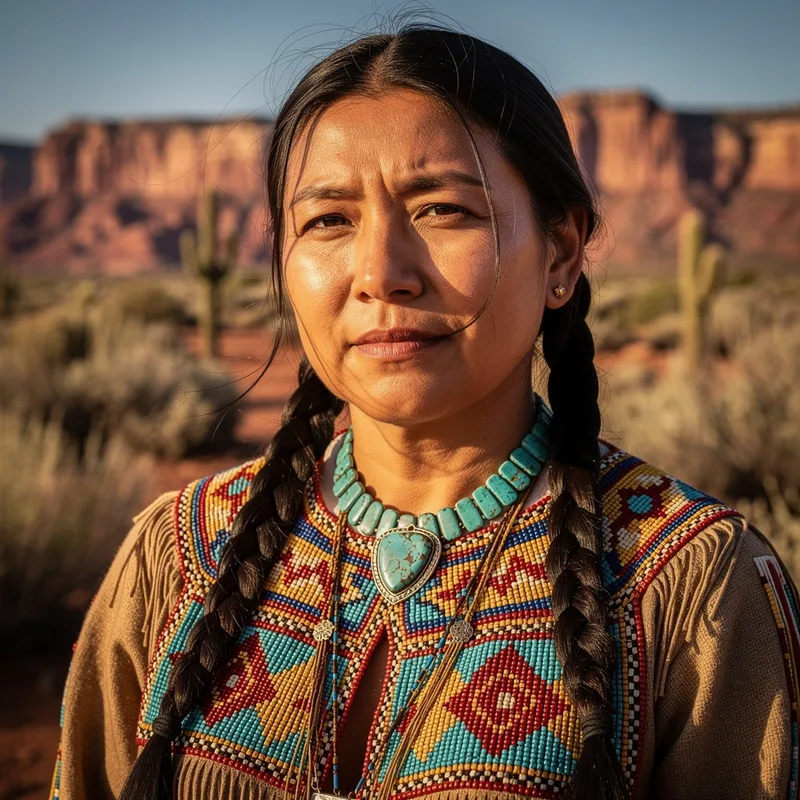
Native American
 161
3.4
161
3.4

- noun
- /ˈneɪtɪv əˈmɛrɪkən/
- The private nature of many Native American spiritual practices was another theme that emerged.
- Native Americans
- European and Native American
- Asian or Native American
Loading YouTube…
Watch on YouTubeWhat role did Native American people take in the war?
- What role did Native American people take in the war?
- And he does bring up the example of Native Americans.
- This was already in widespread use by Native Americans.
- So on the left you've got a Pilgrim, and on the right you've got a Native American with his arms outstretched.
- So, you know, Native Americans, everyone else also.
- Maybe maybe vampires or something, maybe Native Americans or whatever.
- So, you know, in this country, we did terrible things to the Native Americans and I it's was horrific.
- I don't think they're older than Native Americans.
- Where if you do, that applies to black people too, brown people too, Native Americans.
- I mean, they went there and like took over the country from Native Americans, stole it.
Examples
-
Researchers must become learners of the history and evolution of the Native American community being considered for research.
Academic text (2011) -
What role did Native American people take in the war?
-
To this message, I had an ancient Native American saying, Treat the earth well.
-
This is something that a lot of Native American tribes would do.
-
At issue was whether scientists or Native Americans could take possession of his remains.
Academic text (2011) -
For instance, Edward S. Curtis's photos of Native American people are well known from history.
Academic text (2012) -
I want to use my given talents to educate and help Native Americans fulfill their dreams.
Fiction book (2002) -
After the war, the British hopes to end clashes with Native American tribes and bring peace to the frontier.
-
I'm a Native American.
-
Many Native American tribes have rich traditions that are still celebrated today.
Synonyms
 84
3.7
84
3.7
A person from the original people of a place, not later settlers
 4
8.6
4
8.6
A person from the first people living in a place before others arrived
 2
7.6
2
7.6
A member of the first people who lived in a region
 1
9.9
1
9.9
A Spanish name for a native person from the Americas used in colonial times


 1
7.3
1
7.3
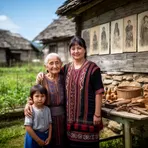
A person whose family comes from the native peoples of North or South America
 1
9.4
1
9.4
A person native to a place where their family lived for many generations

A person from the native peoples of the Americas or a language they speak
Surface Forms
Morphology
The phrase is a straightforward adjective+noun composition: 'native' (an indigenous person) + 'American' (of the Americas), so its referent—an indigenous person of the Americas—is directly derivable from the constituents. This compositional pattern is common cross-linguistically and shows no idiomatic shift, making it immediately understandable to learners who know the two words.
Etymology
Native American started as a label meaning a 'native' of the Americas, someone who lived there before Europeans arrived. That's why it now means 'a member of the Indigenous peoples originally living in North or South America'.