
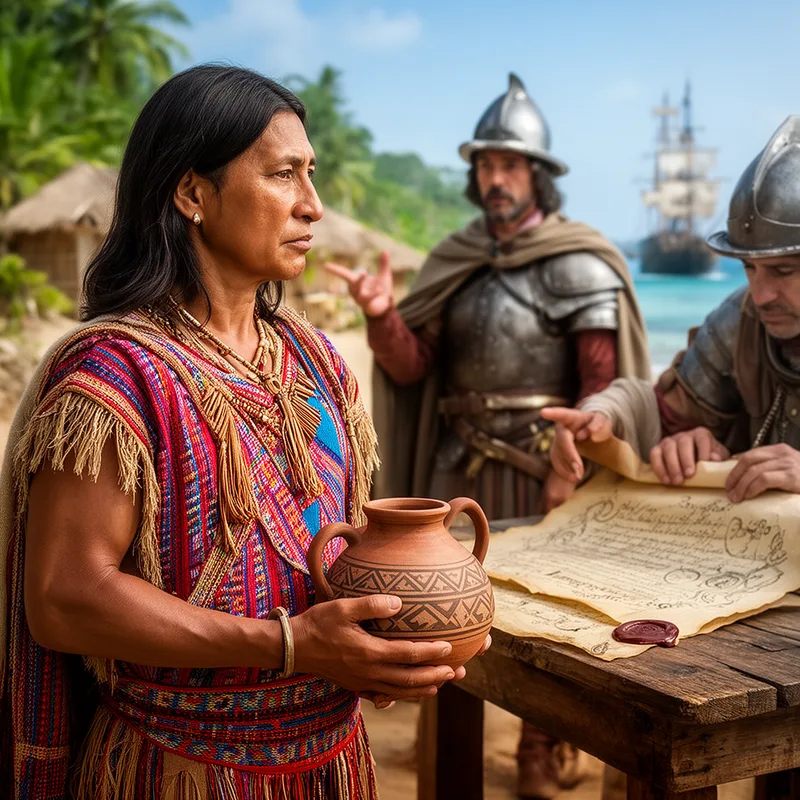
indio
 1
9.9
1
9.9

- noun
- /ˈɪn.di.oʊ/
- Archaic
- To his credit, he comes to recognize the truth of the message Juan Diego announces and the indio's dignity as a child of God called by Guadalupe.
- many indios
- called indios
- more indios
Loading YouTube…
Watch on YouTubeBut what he had was a huge fucking ego and a huge fucking necessity to be recognized other than a little Indio from the mountains, right?
- But what he had was a huge fucking ego and a huge fucking necessity to be recognized other than a little Indio from the mountains, right?
Examples
-
Behind the Spaniards sat the mission indios in their sandal-covered feet and white cotton clothes.
Fiction book (1995) -
The indios of the region did not care for the silver from the mine, but they wanted the livestock.
Fiction book (1995) -
All the indios know your medicine is powerful and your heart is kind.
Fiction book (1995) -
Lately, there had been so many indios that the chapel filled up quickly and some had to stand outside for the mass.
Fiction book (1995) -
Long shadows streaked across the plaza as Ipa joined the indios walking to the chapel, weary from a long day's work.
Fiction book (1995) -
While Fray Ignatio tended the Spaniards, Fray Bernardo walked among the indios.
Fiction book (1995) -
At the outset of the account, Juan Diego stands meekly before the bishop; in the end, the stooped indio stands erect while the bishop and his household kneel before him and venerate the image on his tilma.
Academic text (2009) -
The indio proudly wore traditional clothing during the festival celebrating their heritage.
-
In colonial times, an indio often faced discrimination from the European settlers in their community.
-
The elder indios shared stories of their ancestors with the younger generations at the gathering.
Synonyms
 161
3.4
161
3.4
A person whose family lived in North or South America before Europeans arrived
 84
3.7
84
3.7
A person from the original people of a place, not later settlers
 4
8.6
4
8.6
A person from the first people living in a place before others arrived
 2
7.6
2
7.6
A member of the first people who lived in a region
 1
5.1
1
5.1
A person from the native peoples of South America before European arrival


 1
7.3
1
7.3
A person whose family comes from the native peoples of North or South America
 1
9.4
1
9.4
A person native to a place where their family lived for many generations

A person from the native peoples of the Americas or a language they speak
Surface Forms
Etymology
Indio was used in Spanish for a native person because early explorers thought they had reached India and called the local people 'indios'. That's why in colonial times official documents used indio to mean a native person of the Americas.