

to wipe off
 20
1.0
20
1.0

- phrasal verb
- /waɪp ɔf/
- She used a cloth to wipe off the dust from the table.
- wipe off the dust
- wipe off the paint
- wipe off his face
Loading YouTube…
Watch on YouTubeSo you might see it as I wipe off my makeup.
- So you might see it as I wipe off my makeup.
Examples
-
Make sure to wipe off any excess paint before we start the project.
-
So you might see it as I wipe off my makeup.
-
So after that I wipe off my face.
-
Got some stuff to wipe off your face, too.
-
The Guard tries to wipe off his hand on the wall.
Fiction book (1991) -
So now we're going to just wipe off this powder.
-
I think I'm going to wipe off my foundation.
-
I have to be careful or I'll wipe off all the powder.
-
Just need to wipe off this glitter.
-
The bartender came to wipe off the coffee table, and they all lifted up their drinks.
Fiction book (2000)
Synonyms
 531
1.0
531
1.0
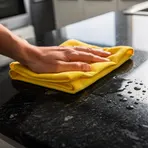
To clean and dry a surface by rubbing it with a cloth or your hand
 144
1.6
144
1.6
Remove marks, writing, or digital files so they are no longer visible
 66
1.0
66
1.0
To remove small dry particles from a surface by wiping or brushing
 62
1.2
62
1.2
To rub material off a surface with something hard or sharp
 55
1.0
55
1.0
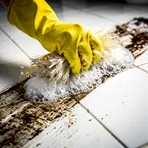
To clean something by rubbing it hard with a brush and water
 37
1.0
37
1.0
To clean a floor with a long handle and wet cloth
 31
1.0
31
1.0
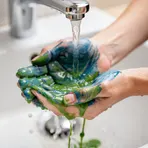
To remove something from a surface by washing with water or soap
 28
2.0
28
2.0
To remove something from a surface by moving a cloth over it, like tears or dirt
 10
1.6
10
1.6
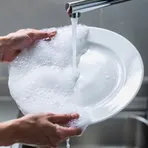
To wash something with water to remove soap or dirt
 10
1.8
10
1.8
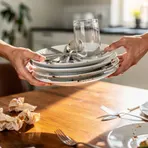
To take things away from a place to make it tidy
 9
2.0
9
2.0
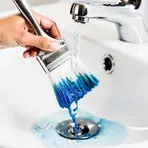
Clean something using water to remove dirt or stains
 8
1.8
8
1.8
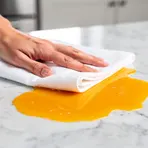
To clean a surface using a cloth or towel to remove a spill
 5
3.4
5
3.4
Come off a surface when something moves against it
 5
2.6
5
2.6
To remove liquid or dirt from a floor with a cloth
 3
5.2
3
5.2
To rub a surface with a small rough tool to remove something
 2
8.1
2
8.1
To remove something so it is no longer visible or remembered
 1
2.5
1
2.5
To remove dirt or stains by rubbing hard with a brush
 1
3.4
1
3.4
Take a thin layer off the top of a liquid
 1
3.7
1
3.7
Take oil or fat from the top of a liquid using a spoon
 1
4.3
1
4.3
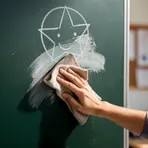
Erase a mark by using an eraser or cloth until it disappears
 1
3.4
1
3.4
Remove a mark by moving a cloth or hand over it many times
 1
4.7
1
4.7
To remove the top layer of something by rubbing it with sandpaper


 1
1.0
1
1.0
To remove dirt or mud from a surface

Remove marks or stains from a surface so it looks clean
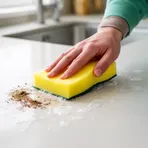
To rub a surface with a wet sponge to clean it

To remove dust or crumbs quickly with a light movement

Wear away the surface of something by rubbing or scraping
Antonyms

How Clean

Surface Forms
Morphology
The meaning 'to remove something from a surface by rubbing or erasing' is directly derivable from combining 'wipe' (to remove dirt or moisture by rubbing) with the particle 'off' (indicating removal). This is a standard verb + particle compositional pattern in English (and mirrored in many languages), so a B1 learner who knows the constituents will readily infer the MWE meaning.
Etymology
Wipe off comes from the simple picture of using a cloth to rub something until it comes off a surface. Here wipe is the rubbing and off shows the thing is removed, so it means 'to remove something by rubbing or wiping'.