
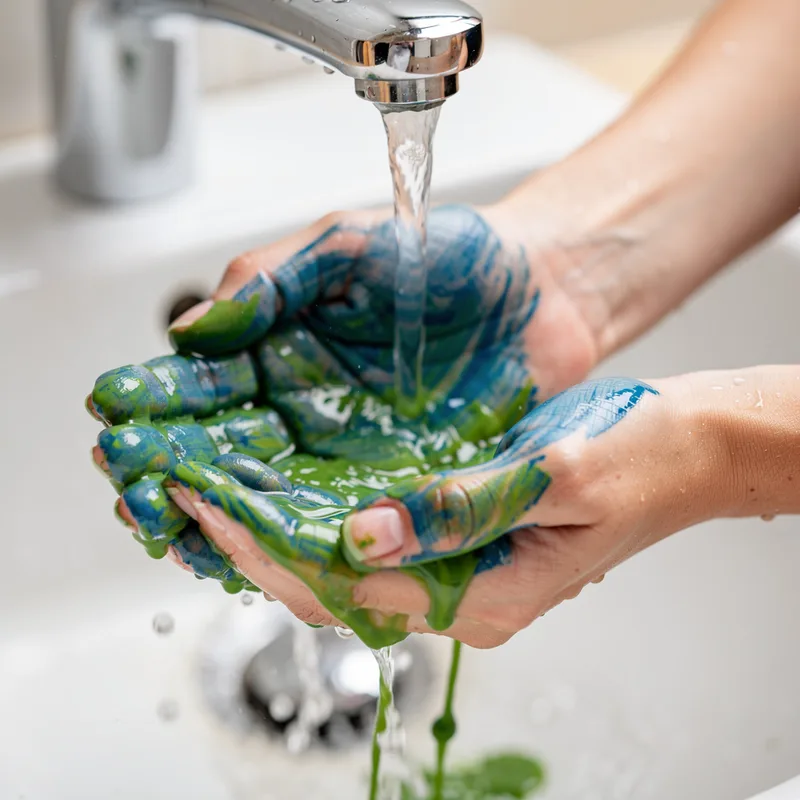
to wash off
 31
1.0
31
1.0

- phrasal verb
- /wɔʃ ɔf/
- After a long day, she decided to wash off the dirt and sweat from her hands.
- wash off blood
- wash off the mud
- wash off the makeup
Loading YouTube…
Watch on YouTubeSo now I'm going to wash this mask off and the lip scrub.
- So now I'm going to wash this mask off and the lip scrub.
- I'm going to go wash it off and we will get to priming with gold.
- It's tingly, but it's a good tangle and then you wash it off.
- It says pumpkin enzyme mask, paint thin layer, let dry, wash off.
Examples
-
Then, workers wash off the remaining fruit and put the seeds out to dry.
-
It's the blood that doesn't wash off so easily.
-
I am going to wash it off with water.
-
This stuff actually does wash off so well.
-
I can go wash it off.
-
Are you going to wash it off?
-
Now I'm going to go wash this stuff off my face.
-
Mama, do you think we got enough water to wash off the stairs?
Fiction book (1994) -
Don't forget to wash off your makeup.
-
Gideon is in the background in the kitchen washing off the vegetables.
Fiction book (1990)
Synonyms
 ∞
1.0
∞
1.0
To remove dirt and stains
 941
1.0
941
1.0
To clean something with water, often using soap
 531
1.0
531
1.0
To clean and dry a surface by rubbing it with a cloth or your hand
 83
1.0
83
1.0
To wash something with water to remove soap or dirt
 55
1.0
55
1.0
To clean something by rubbing it hard with a brush and water
 37
1.0
37
1.0
To clean a floor with a long handle and wet cloth
 33
3.0
33
3.0
Remove dirt and germs from a person's body by washing
 28
2.0
28
2.0
To remove something from a surface by moving a cloth over it, like tears or dirt
 20
1.0
20
1.0
Remove dirt or marks from a surface by rubbing with a cloth
 10
1.6
10
1.6
To wash something with water to remove soap or dirt
 9
2.0
9
2.0
Clean something using water to remove dirt or stains
 8
1.8
8
1.8
To clean a surface using a cloth or towel to remove a spill
 5
3.4
5
3.4
Come off a surface when something moves against it
 5
2.6
5
2.6
To remove liquid or dirt from a floor with a cloth
 1
2.5
1
2.5
To remove dirt or stains by rubbing hard with a brush
 1
3.4
1
3.4
Remove a mark by moving a cloth or hand over it many times


 1
1.0
1
1.0
To remove dirt or mud from a surface

To clean something using water to remove dirt or chemicals
To rub a surface with a wet sponge to clean it

To clean something very well by scrubbing or washing

To remove dust or crumbs quickly with a light movement
Antonyms


How Clean

Surface Forms
Morphology
The meaning is directly derivable from combining 'wash' (to clean with water/soap) with the particle 'off' (indicating removal), so it literally means to remove something by washing. This verb + particle pattern is a common, compositional English construction and has clear cross-linguistic parallels, so a B1 learner who knows both words will readily understand it.
Etymology
The verb wash off gives a simple picture: when you wash dirt or paint, water takes it off, meaning 'away' from the surface. So, wash off means 'to remove something from a surface by washing'.