
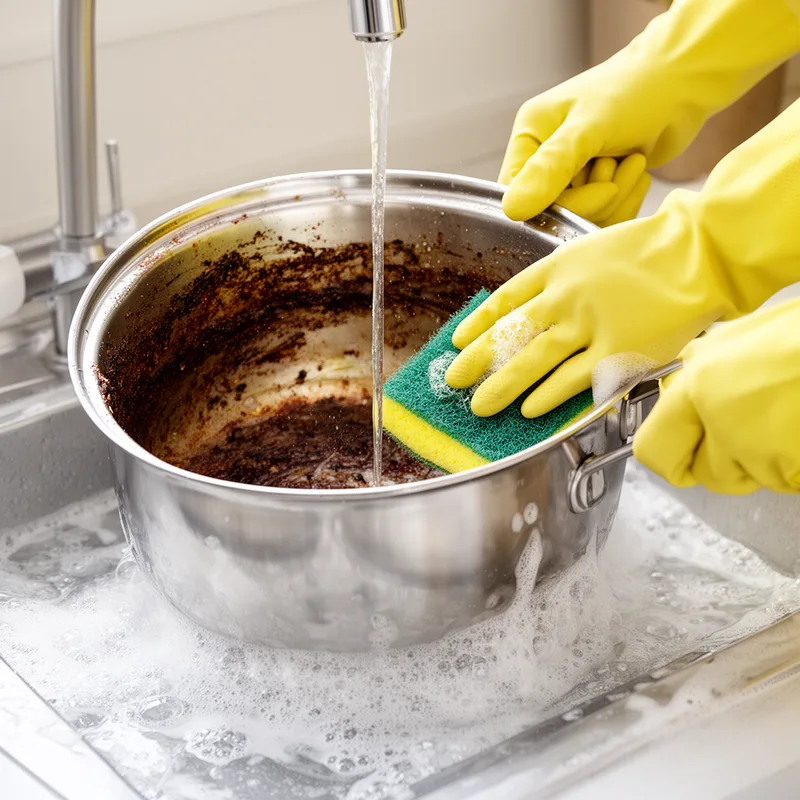
to scour out
- phrasal verb
- She spent the afternoon scouring out the dirty pots and pans in the kitchen.
Examples
-
Before reusing the jar, make sure to scour out any residue inside.
-
They always scour out the pans after each use to prevent buildup.
-
She scoured out the old bathtub until it shone like new.
-
Please scour out the old carpet.
-
She needs to scour out the dirty pots!
-
We need to scour out the old oven before we can use it for baking.
-
To maintain the pool, he had to scour out all the debris from the bottom.
Synonyms

 ∞
1.0
∞
1.0

To remove dirt and stains
 433
1.0
433
1.0
To make a room or area free of dirt and tidy by removing mess
 227
1.0
227
1.0
To clean a floor or surface by brushing away dirt with a broom
 51
4.5
51
4.5
Force unwanted people or things out of a place, often using water
 31
1.0
31
1.0
To remove something from a surface by washing with water or soap
 15
4.8
15
4.8
To clean something by rubbing it hard with a rough cloth or brush
 9
2.0
9
2.0
Clean something using water to remove dirt or stains
 5
2.6
5
2.6
To remove liquid or dirt from a floor with a cloth
 3
3.2
3
3.2
Remove dirt or stains from something using hot steam
 1
2.5
1
2.5
To remove dirt or stains by rubbing hard with a brush
 1
2.2
1
2.2
To remove dirt or leaves from a place using a broom
 1
2.3
1
2.3
To clean the kitchen by rubbing surfaces to remove dirt or stains


 1
1.0
1
1.0
To remove dirt or mud from a surface

To remove liquid from a surface by wiping it with a cloth
Antonyms

How Thorough

Surface Forms
Morphology
The base verb 'scour' means to clean by heavy scrubbing, and adding the particle 'out' signals removing dirt from the interior or doing the action completely. This verb+out compositional pattern (intensifying/completive meaning) is common and predictable, so a B1 learner who knows both constituents can infer the MWE meaning.
Etymology
Scour out comes from the image of scour (to rub hard) and out (the inside), like scraping the inside of a pan or jar until all the dirt and old food are removed. That's why it means 'to clean something thoroughly'.