
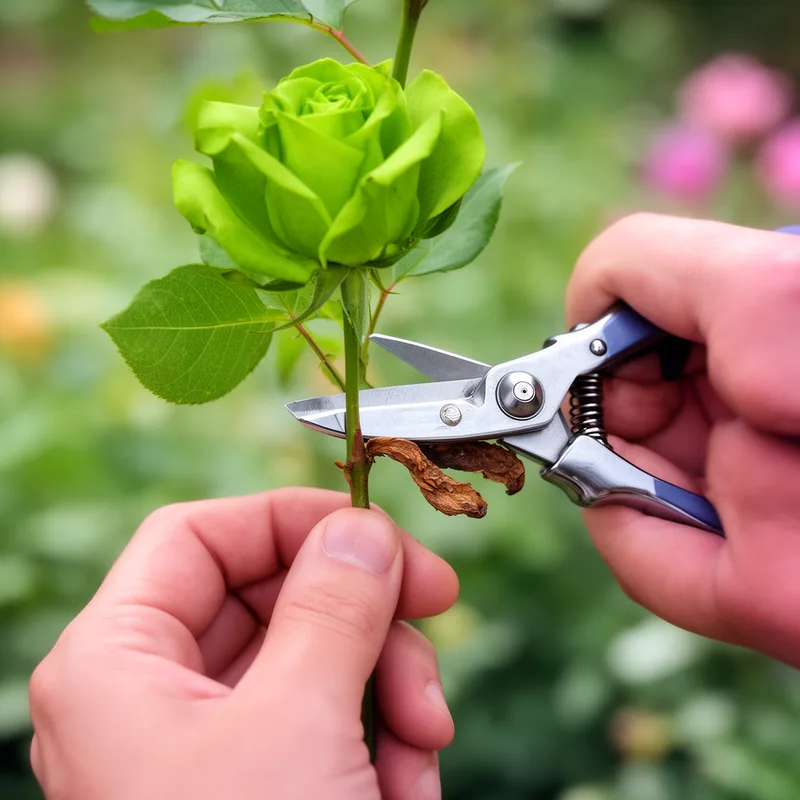
to nip off
- phrasal verb
- To encourage new growth, you should nip off the dead leaves in early spring.
- nip off young shoots
Examples
-
The gardener will nip off the buds to promote a fuller bloom on the rose bush.
-
One to hold him down by the legs and the other to nip off the squealers.
-
If they are short and fine, they should be nipped off on the spot by forceps, and the missile drawn out without them.
-
After noticing some damaged leaves, she decided to nip off the affected parts to keep the plant healthy.
Synonyms

 241
1.4
241
1.4

To remove unwanted parts like seeds or stems
 190
4.1
190
4.1
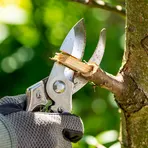
To remove something by cutting it away from what it is attached to
 77
3.5
77
3.5
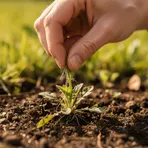
To pull something out quickly with the fingers
 55
4.6
55
4.6
To pinch quickly with fingers or teeth
 51
1.6
51
1.6
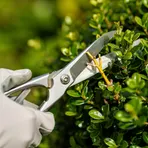
To cut hair or plants shorter with scissors
33
3.5
To make a small cut on the skin or a surface, often by accident
 20
2.1
20
2.1
To cut something quickly and neatly with scissors
 12
2.1
12
2.1
To remove a piece from something using the teeth
 9
4.3
9
4.3
Pull things away one at a time
 9
3.5
9
3.5
To break a piece from something with a quick, sharp movement
 9
4.6
9
4.6
To cut a part from something with one quick move
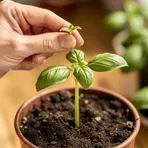 5
6.1
5
6.1
Cut off the tip of a plant shoot to make it grow more branches
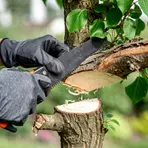 5
3.4
5
3.4
To remove a part from something with a knife or tool
 2
3.7
2
3.7
To cut a small part off something quickly and neatly with scissors or shears
Antonyms

How Much

Surface Forms
Morphology
The meaning 'to remove or sever by pinching or snipping' follows directly from combining 'nip' (to pinch or snip sharply) with the particle 'off' (indicating removal), forming a literal phrasal-verb meaning. This verb+particle composition is a common, compositional pattern in English, so a B1 learner who knows both constituents would likely infer the MWE's meaning.
Etymology
Nip off comes from the quick action of nip and off, like a gardener pinching or snipping a small bud or a dead leaf to clean a plant. So it now means 'to remove' a small part quickly or neatly.