

to disarticulate
 1
9.8
1
9.8

- verb
- /ˌdɪsˈɑːrtɪkjʊleɪt/
- Specialized
- Mammoth was tasty, Joyce says—even the toes were disarticulated to get at the fat pads.
Examples
-
The place of burial and disarticulated state of the bones might suggest this.
Blog text (28) -
Looking down, we see the disarticulated skeleton of Mary Celestia 57 feet below.
Academic text (2011) -
The incus was disarticulated and removed for access.
Academic text (1999) -
Well, her skeleton was disarticulated, so it's possible she wasn't originally buried there.
Blog text (28) -
Their excitement mounted when, six inches into the ground in the first unit, they found disarticulated remains and an identifying coffin plate.
Academic text (2009) -
Unfortunately, most of the material found was disarticulated, lying in a large jumble of bones, so determining what bones belonged to what animal was problematic.
Academic text (1991) -
The chef decided to disarticulate the chicken at the joints to prepare it for roasting.
-
Before studying the skeleton, the researchers needed to disarticulate the bones for better access to each part.
-
After the dissection, the students were shown how to disarticulate the limbs from the main body.
Synonyms
 513
1.3
513
1.3
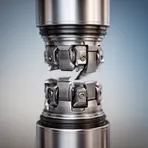
To break something into two or more parts
 82
5.3
82
5.3
To stop being part of or connected to something
 66
2.7
66
2.7
Separate something into smaller pieces
 50
3.0
50
3.0
To separate something into parts so it can be moved or fixed
 47
2.6
47
2.6
To divide something into smaller parts
 29
8.9
29
8.9
To cut off the limbs of a person or animal
 28
2.8
28
2.8
To make a piece come away from something by hitting or bending it
 21
3.2
21
3.2
To break something into pieces by hand
 12
4.3
12
4.3
To separate a part from a larger group for a special task
 5
5.3
5
5.3
To disconnect two things that are joined, often machine parts
 4
6.7
4
6.7
Disconnect parts that were joined so they work independently
 1
7.4
1
7.4
Separate things that are attached to each other
 1
6.1
1
6.1
To separate something from what it is connected to
 1
9.9
1
9.9
To cut or separate something into parts, often by breaking it

To cut an animal or its meat at the joints into pieces

To cut meat at the places where bones meet so it can be cooked

To tear something into separate parts, usually by force

To divide something into separate parts
Antonyms

How Separated


Surface Forms
Morphology
disarticulate = articulate (opaque) = dis + articulate + dis
Although formed by dis- + 'articulate', most learners know 'articulate' as 'speak clearly', so they will not infer the specialized anatomical meaning 'separate at the joints'.
Etymology
Disarticulate comes from the parts dis- meaning 'apart' and articulate meaning 'joint' or 'where two parts meet'. So, to disarticulate is to take something apart at its joints, for example separating bones or cutting a chicken at the joints.