
to disjoint
- verb
- /dɪsˈdʒɔɪnt/
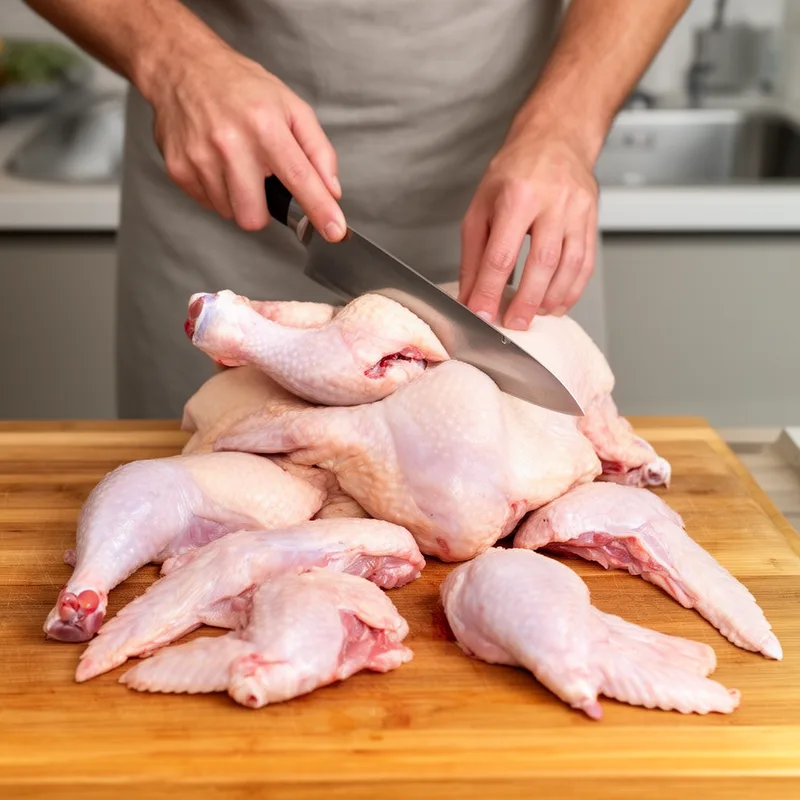
- Don't disjoint the meat too roughly!
Examples
-
Before roasting the bird, you should disjoint it into manageable pieces.
-
The butcher expertly disjointed the carcass in just a few minutes.
-
It can be tricky to disjoint a rabbit without practice.
-
The butcher disjoints the chicken expertly.
-
To make the recipe easier, you should disjoint the chicken wings before cooking them.
-
The butcher expertly disjointed the lamb at the joints for the customers.
-
It's helpful to disjoint the meat into smaller pieces to ensure even cooking.
Synonyms

 513
1.3
513
1.3

To break something into two or more parts
 29
8.9
29
8.9
To cut off the limbs of a person or animal
 1
9.8
1
9.8
Take bones or meat apart at the joints
 1
7.4
1
7.4
Separate things that are attached to each other
 1
9.9
1
9.9
To cut or separate something into parts, often by breaking it

To cut meat at the places where bones meet so it can be cooked

To divide something into separate parts
How Separated

Surface Forms
Morphology
Etymology
Disjoint comes from the parts dis- 'apart' and joint 'joined'. In cooking and butchery, to disjoint means to cut something 'apart at the joints', which is why a butcher disjoints a bird into pieces.