

to take it away
 136
3.2
136
3.2

- phrasal verb
- /teɪk ɪt əˈweɪ/
- She asked the waiter to take it away because the dish was not what she ordered.
Loading YouTube…
Watch on YouTubeI, I, I, I, you know, please, please take it away from me.
- I, I, I, I, you know, please, please take it away from me.
- Is essentially give somebody an incentive upfront and tell them you will take it away unless they performed.
- So we got big, you know, pumper trucks and so they're taking it away.
- I'd much prefer to add it than have to worry about kind of taking it away.
- You give us the hope that it's all just transitory and then you take it away from us.
- And in contrast, in West Germany, you could go to the next car dealership and take it away the same afternoon.
- And finally a woman came through that group of men and went directly to her lean down and helped her up and took her away from that situation.
- Then a man you didn't even know who gets bit by dogs and animals all the time had to come and pick it up and take it away.
- Each man's master is the person who has authority over what the man wishes or does not wish, so as to secure it or to take it away.
Examples
-
Then she made a mistake; she tried to take it away from him.
Fiction book (1998) -
Nobody's gonna take it away from me.
-
Shall I take it away from him?
-
For when they give it to you with one hand, they take it away with the other.
Fiction book (1991) -
I will pay for the dish, but take it away, please.
-
She would not let you take it away from her.
-
We come with a truck, use their loaders, and take it away.
Academic text (1999) -
And they're trying to take it away from me by raising the price.
Fiction book (1992) -
"The Forever Kid won't let anyone take it away from him," she replied.
Fiction book (1991) -
And if you don't believe me, anyone who's got young kids in there, take something away from them.
Synonyms
 ∞
1.0
∞
1.0
Remove something from a place or person
 ∞
1.5
∞
1.5
To move something or someone away from a place
 ∞
3.0
∞
3.0
To free someone from something harmful or unwanted
 ∞
1.6
∞
1.6
To remove or throw away something you do not want
 948
1.9
948
1.9
To remove something from a place or container
 795
2.3
795
2.3
To remove something from a place or reduce something important, for example a right
 502
3.4
502
3.4
Remove or kill something completely so it is gone
 477
1.8
477
1.8
To get rid of something you do not want, for example by putting it in the bin
 189
4.2
189
4.2
Destroy something so nothing is left
 159
3.5
159
3.5
To take money or things out of a place where they are kept
 156
2.2
156
2.2
Remove all traces of something from memory or history
 131
3.5
131
3.5
To get rid of something you do not need
 91
3.1
91
3.1
Remove all things from a place so it becomes empty
 88
3.7
88
3.7
Remove something so it is no longer used
 85
6.6
85
6.6
Remove something harmful completely, for example a disease or pest
 60
6.9
60
6.9
To destroy something completely, often on purpose
 56
4.1
56
4.1
Deal with and finish a problem or task so it no longer causes trouble
 49
6.3
49
6.3
To remove unwanted substances, things, or people by cleaning
 37
3.8
37
3.8
To remove unwanted people or things from a group
 29
4.6
29
4.6
To make a feeling or idea go away
 27
4.0
27
4.0
Remove an outside layer or covering from something to show what is under it
 21
8.8
21
8.8
To remove all signs of something like a record or memory so it cannot be found
 21
5.5
21
5.5
End something completely, for example a custom or a debt
 16
3.8
16
3.8
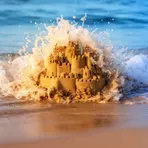
To get rid of something completely so it no longer exists
 10
1.8
10
1.8
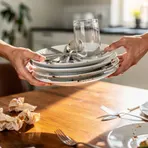
To take things away from a place to make it tidy
 10
3.6
10
3.6
Remove people completely from a place or group because they are unwanted
 8
3.0
8
3.0
Remove things from a surface to make it empty or clean
 7
4.3
7
4.3
To make people forget and stop caring about something
 7
3.7
7
3.7
To pull something away from where it is, for example a bandage or curtain
 5
3.4
5
3.4
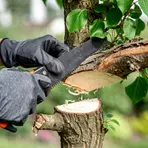
To remove a part from something with a knife or tool
 3
4.8
3
4.8
To get rid of something you do not want or need
 2
8.1
2
8.1
To remove something so it is no longer visible or remembered
 1
6.0
1
6.0
To reject or get rid of something no longer needed
 1
2.2
1
2.2
To remove dirt or leaves from a place using a broom
 1
7.5
1
7.5
To get rid of something unwanted, for example a bad habit or a weak branch
 1
9.9
1
9.9
To destroy something completely, including its root
Antonyms


How Thoroughly
85
6.6
 56
4.1
136
3.2
10
1.8
6
1.8
56
4.1
136
3.2
10
1.8
6
1.8
Surface Forms
Morphology
The meaning 'to remove or clear something' is directly derivable from the constituent parts: 'take' (remove) combined with the particle 'away' (to another place), with 'it' referring to the object. This is a standard, compositional phrasal-verb pattern that is cross-linguistically common, so a B1 learner who knows the individual words will readily infer the meaning.
Etymology
Take it away may come from restaurants and cleaning jobs: imagine a waiter or cleaner picking up a plate or some trash and removing it from the table. This literal image of the words take and away is why the phrase means 'to remove or clear something unwanted'.