
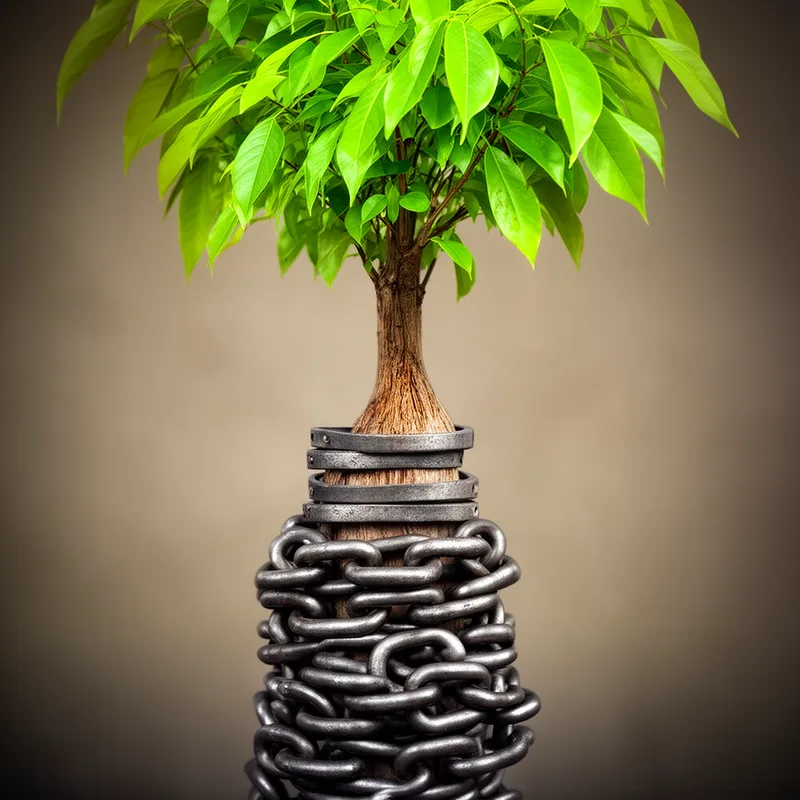
to strangle
 33
6.7
33
6.7

- verb
- /ˈstræŋɡəl/
- The excessive regulations may strangle innovation in the tech industry.
Loading YouTube…
Watch on YouTubeIt seems a little like you're strangling the situation, a little scary.
- It seems a little like you're strangling the situation, a little scary.
- In both cases, draconian restrictions on freedom of movement strangle production.
- He is slowly strangling our freedom.
- And I would even say that you strangle everyone that you cling to as well.
- So what, we're just not going to have this conversation, we're going to strangle it right at the source.
- I think the pressure to be PC is just overwhelming, overwhelming and it's strangling.
- Today we must save the life, the naked and poor life of our country and people, as everyone feels a strangling hand on his throat.
- You know, Ofcom strangled the, the broadcasters with what they're allowed to put on the television.
- But that critical mind can really strangle the creative process when what you need most of the time is more ideas, not more criticism.
- They come when the business strangles. My love of it
- No tired Queens, no ghosts coming back to strangle you with their shredded remnants of your failures.
Examples
-
The problem was that the Australian and New Zealand economies were being strangled by not enough consumerism.
Academic text (1991) -
Conformity to standards and ideals, rules and methods, can strangle the very life from creative talent.
Academic text (1990) -
But we did strangle a potential clean energy source in a lot of ways.
-
So what, we're just not going to have this conversation, we're going to strangle it right at the source.
-
But that critical mind can really strangle the creative process when what you need most of the time is more ideas, not more criticism.
-
Despite all odds, the goal must be to strangle the financial networks.
Academic text (1994) -
The IAA is just trying to strangle us in red tape.
Fiction book (2001) -
Meanwhile, France found itself at war, with neighboring monarchs seeking to strangle the Revolution before it spread.
-
Imposing a national standard when dealing with online obscenity could likewise strangle diversity in material distributed online.
Academic text (2002) -
New infusions of aid would likely just perpetuate the kleptocratic regimes that have slowly strangled the continent since independence.
Academic text (2005)
Synonyms
 ∞
3.0
∞
3.0
To stop movement, access, or progress
 187
3.2
187
3.2
Stop someone or something from moving forward
 97
4.9
97
4.9
To find it hard to speak because you feel strong emotion
 87
7.4
87
7.4
To stop someone from doing what they want
 86
4.6
86
4.6
Hold a person or thing so it cannot move freely
 64
5.8
64
5.8
To make a sound or feeling quieter so it is less noticeable
 53
5.7
53
5.7
To feel limited and unable to grow or express yourself
 49
5.3
49
5.3
To hold back a feeling or reaction so it does not show
 47
4.2
47
4.2
To make it harder for someone or something to move forward
 39
6.0
39
6.0
To stop a feeling or sound from being shown
 35
6.2
35
6.2
To restrain someone with chains or limit their freedom
 25
3.8
25
3.8
Cause a delay that stops activity or movement
 20
4.0
20
4.0
To limit growth and movement of people or things
 20
8.7
20
8.7
To stop someone from making progress toward a goal
 14
5.7
14
5.7
To limit the progress or success of something
 12
6.1
12
6.1
Stop a process or action from happening
 11
7.8
11
7.8
Completely stop protests or criticism
 11
6.3
11
6.3
Make someone unable to act naturally or show feelings
 7
6.1
7
6.1
To stop a feeling or action completely
 6
6.4
6
6.4
To stop a supply by blocking its source or flow
 5
8.0
5
8.0
To stop or slow progress
 4
7.0
4
7.0
Stop yourself from showing a feeling when you want to cry
 3
8.8
3
8.8
To squeeze someone's throat to stop their breathing
 2
7.7
2
7.7
To stop yourself from showing strong feelings like sadness or anger
 1
4.8
1
4.8
Stop someone from acting or making decisions
 1
8.2
1
8.2
To stop a person or organization from making progress


 1
7.8
1
7.8
Make someone feel they cannot act freely or be themselves

To hold back or make it hard for someone to act freely
Antonyms


How Restrictive

Surface Forms
Etymology
The word strangle comes from an old Germanic root meaning 'tight' or 'to squeeze', similar to string and strain. So when people say rules or laws 'strangle' something, they mean those rules 'squeeze' it and stop it from growing or showing itself.