
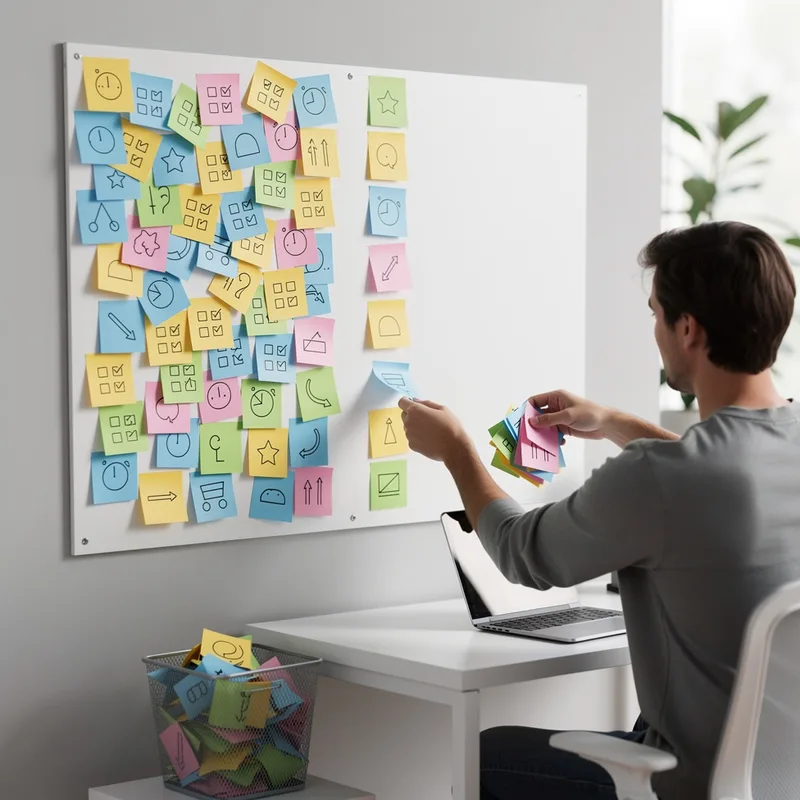
to prune
 2
4.2
2
4.2

- verb
- /pruːn/
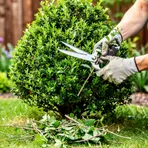
- To improve its appearance, she decided to prune the overgrown shrub in the garden.
Loading YouTube…
Watch on YouTubeAnd as we age, if we don't use those connections, they're they're literally pruned away.
- And as we age, if we don't use those connections, they're they're literally pruned away.
- So stability is not because you have trimmed your life down or pruned it down to minimal and you're stable.
- And if we can do that, if we can prune that out of our lives, we will be calm or gentle rather than inclined to anger.
- And whenever he feels one of his fits coming on, he'll just sort of clip and prune it.
- So we we can't, you know, grow new neurons or indeed prune, you know, neurons as well, which is what the brain does as well.
- And if you can just prune that, you know, there's inflammation levels down, that'll have huge effects on your risk of virtually every disease.
- So we tend to prune a roll files and compressed stuff, whereas I think he keeps pretty much everything, which is fine.
Examples
-
Let's prune our list a little.
Blog text (19) -
I think it's because, well, one thing that needs to happen is we need to, we need to prune those redundant pieces of information away.
-
We're going to have to prune the search space.
-
I do go back and prune my list sometimes, but not all that often.
Blog text (18) -
Insurers are trying to prune their losses.
Blog text (32) -
This requires that we prune the recursion tree at level k and below.
Academic text (2000) -
And it shows every year when CPS scrambles to prune its budget down to the $5 billion it needs to operate.
Blog text (31) -
Healthy brains maintain strong connections between neurons thanks to the brain's continuous efforts to prune itself and remove unused or faulty neural connections.
-
The manager planned to prune the project budget to focus on essential expenses.
-
Farmers often prune fruit trees in the winter to encourage healthier growth in the spring.
Synonyms
 ∞
2.3
∞
2.3
To remove parts or make something shorter, for example text
 ∞
1.6
∞
1.6
To make something smaller in amount, size, or number
 169
2.9
169
2.9
To reduce how much you buy and use to save money and be healthier
 95
2.6
95
2.6
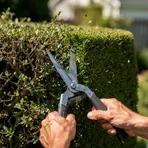
Cut something to make it smaller or neater
 65
2.7
65
2.7
To make something smaller in amount or number
 27
4.0
27
4.0
Remove an outside layer or covering from something to show what is under it
 10
5.1
10
5.1
To make a list or group smaller by removing items over time
 9
4.4
9
4.4
Make something smaller by removing parts you do not need
 9
3.6
9
3.6
To make something shorter while keeping the important parts
 8
4.1
8
4.1
Make something smaller, like a product or living space
 5
4.1
5
4.1
To remove things you do not need from a room or desk to make it tidy
 3
5.5
3
5.5
Make a system or process work better by removing extra parts
 3
3.4
3
3.4
To make something smaller by cutting or removing parts
 3
5.9
3
5.9
To make something smaller gradually by cutting or wearing it away
 1
3.4
1
3.4
Make a thing smaller by cutting or removing parts


 1
7.5
1
7.5
Make something shorter in time or length while keeping its main parts

To remove unwanted parts from something after checking it carefully
Antonyms


Phrasal Verbs


Compounds


How Much

Surface Forms
Etymology
Prune as a verb comes from the same root as the fruit, the Latin prunum, and first meant 'cut away' branches of trees. That's why we now also use prune to mean 'remove' extra or unwanted parts from things like lists or inboxes.