

to foreshorten


 1
7.5
1
7.5
- verb
- /fɔːrˈʃɔːrtn/
- They materialized before our eyes, stumpy limbs and foreshortened bodies, clambering over one another, bobbing up like apples in a barrel.
Examples
-
For several years now, I've been particularly guilty of this, probably because my Advent time has been foreshortened.
Blog text (34) -
Only what is foreshortened does.
Fiction book (1991) -
Why the foreshortened tour, Frank?
-
I'm going to close with a foreshortened attempt to answer this question.
Academic text (1999) -
So in this example, the foreshortened part is the calf.
-
The grownups' bodies were slightly foreshortened, the tops of their heads, which otherwise the children never saw, their most distinctive characteristics.
Fiction book (1990) -
A closer look into the foreshortened entrance of the wineshop behind the horse barricade reveals a half-hidden male figure, either a customer or shop servant.
Academic text (2002) -
An especially corpulent ultra-orthodox Knesset member was often photographed from below, looking up, so that his belly was foreshortened and exaggerated, highlighting his absurd physical proportions.
Academic text (2001) -
To streamline the presentation, we decided to foreshorten the keynote speech by ten minutes.
-
In order to fit everything into the time slot, they will foreshorten some of the chapters in the book.
Synonyms
 ∞
2.3
∞
2.3
To remove parts or make something shorter, for example text
 325
2.0
325
2.0
To make something smaller in amount or size
 201
3.7
201
3.7
To become less in size, importance, or value
 181
2.8
181
2.8
Become less in amount or value
 71
2.8
71
2.8
To make something simpler by cutting out details
 65
2.7
65
2.7
To make something smaller in amount or number
 52
3.0
52
3.0
Become smaller or tighter, for example when a muscle shortens
 45
2.3
45
2.3
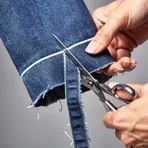
Make something shorter, for example an article, skirt, or route
 34
2.8
34
2.8
To make something smaller in amount or strength
 10
5.1
10
5.1
To make a list or group smaller by removing items over time
 9
3.6
9
3.6
To make something shorter while keeping the important parts
 9
4.4
9
4.4
Make something smaller by removing parts you do not need
 8
7.0
8
7.0
To shorten something by cutting off a part, often the end
 8
4.0
8
4.0
To make something smaller in size or amount
 3
3.4
3
3.4
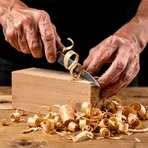
To make something smaller by cutting or removing parts
 3
5.9
3
5.9
To make something smaller gradually by cutting or wearing it away
 2
4.2
2
4.2
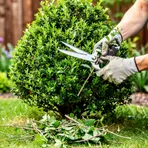
To remove things you do not need to make something smaller or work better
 1
3.4
1
3.4
Make a thing smaller by cutting or removing parts
 1
8.4
1
8.4
To make something smaller so it uses less space or time

Make a book, play, or speech shorter by removing parts while keeping the main idea
Antonyms

How Short

Surface Forms
Morphology
Etymology
Foreshorten comes from the parts fore- ('before' or 'in front') and shorten ('make short'), so a helpful way to remember it is to think of 'bringing the end forward' and making something shorter in length or time.