

to truncate
 8
7.0
8
7.0

- verb
- /trʌŋˌkeɪt/
- The conversion rates shall not be rounded or truncated when making conversions.
- truncated icosahedron
- truncated design
- truncated version
Loading YouTube…
Watch on YouTubeBut I think that if I truncate your question, I get something more interesting.
- But I think that if I truncate your question, I get something more interesting.
- Well, the Internet has truncated media.
- So it actually takes longer to truncate it and keep it succinct and also to put it through all the screens that you're very familiar with.
- Maybe I'll do an acting challenge to try to truncate in a creative, elegant way.
Examples
-
For example, it is likely most variables are truncated at 0 and skewed in one direction or the other.
Academic text (1992) -
The final type of distortion we examined involved omitting or truncating the graphical depiction of negative numbers.
Academic text (2002) -
But I think that if I truncate your question, I get something more interesting.
-
The result is that any thought processes based on such truncated information cannot bring correct conclusions.
Blog text (2) -
To cope with this, we truncated each participant's data at his or her mean reaction time.
Academic text (2013) -
The architect had to truncate the design of the building to fit the smaller lot.
-
Due to time constraints, we decided to truncate the presentation to just the key points.
-
To fit the new schedule, the event was truncated from three days to just one.
Synonyms
 ∞
2.3
∞
2.3
To remove parts or make something shorter, for example text
 ∞
1.6
∞
1.6
To make something smaller in amount, size, or number
 181
2.8
181
2.8
Become less in amount or value
 95
2.6
95
2.6
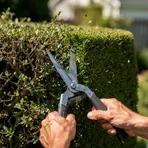
Cut something to make it smaller or neater
 67
3.5
67
3.5
Stop something earlier than planned
 65
2.7
65
2.7
To make something smaller in amount or number
 51
1.6
51
1.6
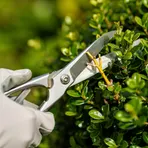
To cut hair or plants shorter with scissors
 45
2.3
45
2.3
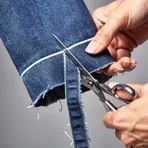
Make something shorter, for example an article, skirt, or route
 10
5.1
10
5.1
To make a list or group smaller by removing items over time
 9
3.6
9
3.6
To make something shorter while keeping the important parts
 9
4.4
9
4.4
Make something smaller by removing parts you do not need
 6
3.4
6
3.4
Cut branches and stems from a plant to help it grow and keep its shape
 3
3.4
3
3.4
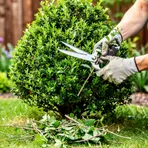
To make something smaller by cutting or removing parts
 1
3.4
1
3.4
Make a thing smaller by cutting or removing parts


 1
7.5
1
7.5
Make something shorter in time or length while keeping its main parts
Antonyms


How Short

Surface Forms
Morphology
truncate = trunc + ate
The meaning 'to cut short' aligns with the combining form 'trunc-' plus the verb-forming suffix '-ate', but 'trunc' is not a standalone modern English word, so learners need knowledge of the Latin-derived combining form or the suffix to infer the meaning.
Etymology
The word truncate comes from the Latin truncare, from truncus meaning 'trunk' or 'stem'. Think of chopping the end off a tree trunk to make it shorter. So to truncate something is to 'cut off' its end and make it shorter.