

to march
 389
1.0
389
1.0

- verb
- /mɑrtʃ/
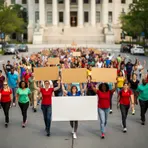
- With this slogan, the residents marched through the center of Lima to demand basic services.
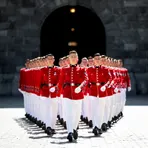
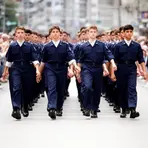
- march in a parade
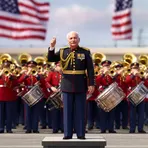
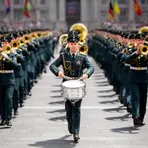
- marching band
- march through the streets
Loading YouTube…
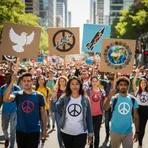
Watch on YouTubeThis time, white, black and brown women marched and fought together.
- This time, white, black and brown women marched and fought together.
- I expect all of you to March with me and press on.
- And that's gnarly to have people March through their town.
- Even though I think Richard basically wants to March in the wrong direction.
- You can just March into Canada, take it over.
- You heard that, the sounds of the drum beats as they marched toward our our party.
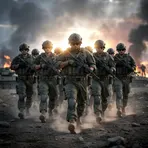
- Our country is a stage when soldiers March into town.
- But if in sports you March right towards the goal, what happens?
- Now I'll, I'm just going to mark, continue to March through my day.
Examples
-
Hundreds of hospital staff had already been marching with signs during lunchtime demonstrations.
Academic text (2011) -
By midday, columns of soldiers were marching through the streets of the city, converging on Camp Jackson.
Academic text (2011) -
You have one minute to march out that door.
-
Soldiers also learn how to march in a style that is specific to the U.S. Army Bands.
Academic text (2015) -
We're marching to a faster pace
-
This time, white, black and brown women marched and fought together.
-
Four months later, hundreds escaped from a center and marched around calling for freedom.
Academic text (2012) -
Thousands of people are marching through the streets to demonstrate for climate action.
-
Every year, veterans march in a parade to honor those who served in the military.
-
The students organized a rally and marched to the school board to demand better facilities.
Synonyms
 27
2.9
27
2.9
To march together in public to celebrate
 12
7.2
12
7.2
To walk in a line during a ceremony
 6
3.8
6
3.8
To move together in a group, often slowly and in an orderly way
Antonyms


Phrasal Verbs




Compounds




- UK
1
5.1
A marching pace faster than walking and slower than running at about 120 steps per minute


The time around March 20 when day and night are nearly equal and spring begins in the Northern Hemisphere



- Jargon
A piece of music that people play while they leave a formal ceremony like a wedding
How Organized

Surface Forms
Etymology
March (verb) comes from Old French marcher 'to walk', first used for soldiers walking in step, so we still say people 'march' in parades or demonstrations with a regular, organised pace. This origin explains why the verb often means walking together or in step.