

recessional march
- noun
- /rɪˈsɛʃənl mɑrtʃ/
- Jargon
- The organist played a stirring recessional march as the wedding party left the church.
Examples
-
Traditionally, a recessional march signals the end of the graduation ceremony.
-
The recessional march echoed through the hall as guests filed out in an orderly procession.
-
The choir sang a beautiful recessional march at the wedding.
-
During the ceremony, the recessional march played softly.
-
The organist played a stirring recessional march as the wedding party left the church.
-
Traditionally, a recessional march signals the end of the graduation ceremony.
-
The recessional march echoed through the hall as guests filed out in an orderly procession.
Synonyms

 8
3.2
8
3.2

A piece of music with a strong, steady beat for bands
 1
7.6
1
7.6
A piece of music played during a formal walk in a ceremony


 1
8.2
1
8.2
Music played or sung as people leave a church service
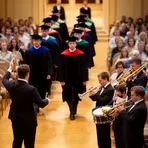
Music with a steady marching beat played during a formal procession
How Formal
1
3.5

- Jargon
- Formal
1
7.6
- Specialized
8
3.2
327
1.0
Surface Forms
Morphology
The meaning is directly and transparently derived from combining 'recessional' (a hymn or piece played as people exit) with 'march' (a musical piece with a steady rhythm), yielding a musical piece played during an exit procession. This is a straightforward compositional noun–noun compound following common lexical patterns, so a B1 learner who knows both constituents would readily infer the meaning.
Etymology
Recessional march The noun recessional march comes from a simple image: a march, steady music, played while people walk out at the end of a ceremony. The word recessional points to 'leaving', so the tune marks the 'end' and helps people leave in order.