

grugru
- noun
- Specialized
- The grugru palm is easily recognized by its distinctive spiny trunk.
Examples
-
Locals often collect the edible nuts from the grugru for making snacks.
-
A grugru can provide shade and food in tropical American forests.
-
The grugru palm is native to tropical regions.
-
Many animals feed on the grugru nuts.
-
The grugru palm is known for its tall, spiny trunk and provides edible nuts.
-
In the Amazon rainforest, the local people harvest the grugru nuts for traditional dishes.
-
The grugru tree flourishes in humid tropical climates, making it a vital resource for wildlife.
Synonyms
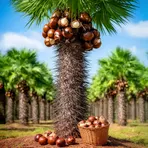
A tropical palm with a thick spiny trunk and edible nuts

A palm tree with a thick spiny trunk and nuts you can eat

A tropical tree with a swollen spiny trunk and edible nuts

A tropical palm tree with a spiny trunk and edible nuts
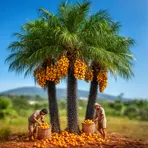
A group of tropical palm trees from Central and South America with spiny trunks and edible fruits

A tropical American palm with sharp spines on its trunk and fruit people can eat
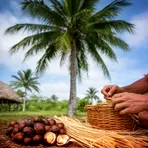
A tropical palm tree that produces edible nuts and strong fiber

A tropical tree with long leaves that makes hard nuts used for buttons

A tropical palm tree whose large nuts make oil and vegetable ivory used for carving
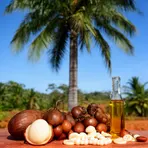
A tall palm from northern Brazil that makes hard nuts used for oil and carved like ivory

A tall palm tree from northern Brazil whose hard nuts produce oil and a white, ivory-like material

A tall palm from northern Brazil with hard nuts that give oil and a material like ivory for carving

A tall palm from northern Brazil with hard nuts that give oil and a material like ivory

A tall palm tree from northern Brazil that has hard nuts with oil and a white core used like ivory

A tall tropical palm that grows in wet places and gives fruit and oil
Compounds

Surface Forms
Etymology
The word grugru probably comes from a Native American name for a small tropical palm that has a swollen, spiny trunk and edible nuts. A helpful way to remember grugru is to think of it as the local palm that gives both 'shade' and 'food', which is why the word refers to that nut-bearing tree.

