
coyol palm
- noun
- Specialized
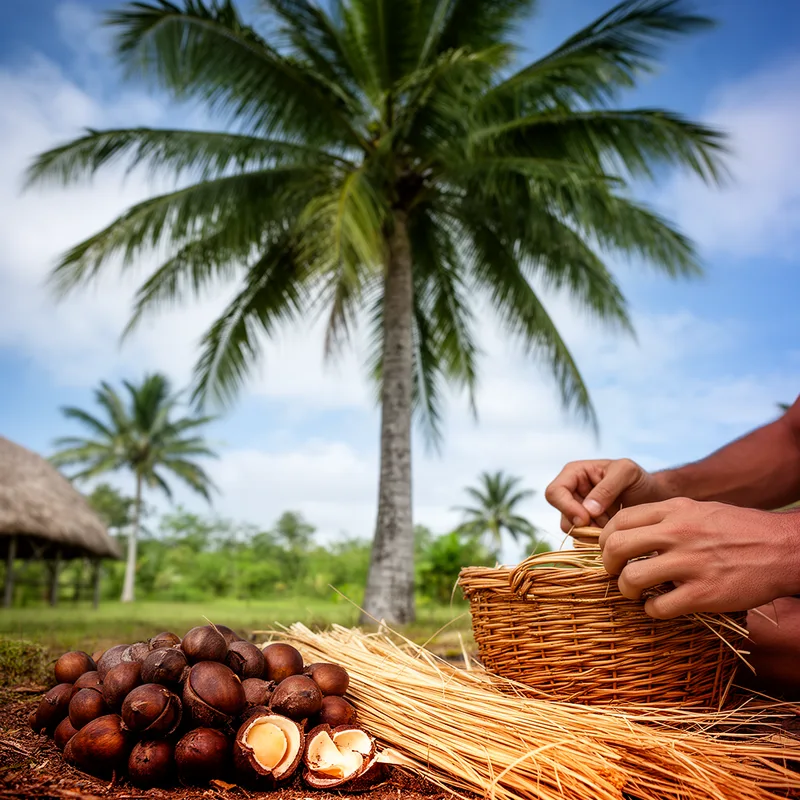
- The coyol palm is valued by local communities for its edible nuts and sturdy fiber.
Examples
-
Artisans weave baskets using fibers from the coyol palm in Central America.
-
Many communities rely on the coyol palm for food.
-
With its graceful appearance, the coyol palm adds beauty and utility to tropical landscapes.
-
The coyol palm is native to Central America.
-
Artisans weave baskets using fibers from the coyol palm in Central America.
-
The coyol palm is valued by local communities for its edible nuts and sturdy fiber.
-
These edible nuts from the coyol palm are a staple food in various tropical regions.
Synonyms

A tall tropical palm tree with large nuts that give oil and a hard material like ivory

A tropical American palm tree whose large nuts produce oil and a hard white material like ivory

A tropical palm tree whose large nuts make oil and vegetable ivory used for carving
Surface Forms
Morphology
The phrase 'coyol palm' is a straightforward noun–noun compound: 'coyol' names a particular kind of palm and 'palm' denotes the tree, so a learner who knows both constituents can infer it is a type of palm that produces nuts and fiber. Botanical naming like this is compositional and cross-linguistically common, making the meaning predictable from the parts.
Etymology
The noun coyol palm may come from a local word for the tree's round nuts. People used the hard coyol nuts for food and the strong fibers from the palm for baskets and ropes, so the name now means this useful tropical tree.

