

Orbignya cohune
- noun
- Specialized
- The oil extracted from Orbignya cohune nuts is valued for its versatility in cooking and cosmetics.
Examples
-
Artisans sometimes use the vegetable ivory from Orbignya cohune seeds to carve buttons and jewelry.
-
Many tropical forests feature Orbignya cohune palms growing in dense clusters near rivers.
-
The Orbignya cohune palm is native to Central America.
-
Many artisans use Orbignya cohune nuts to create beautiful crafts.
-
Artisans sometimes use the vegetable ivory from Orbignya cohune seeds to carve buttons and jewelry.
-
The oil extracted from Orbignya cohune nuts is valued for its versatility in cooking and cosmetics.
-
Many tropical forests feature Orbignya cohune palms growing in dense clusters near rivers.
Synonyms
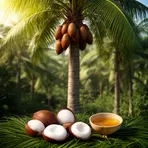
A tropical American palm tree whose large nuts produce oil and a hard white material like ivory

A tall tropical palm tree with large nuts that give oil and a hard material like ivory
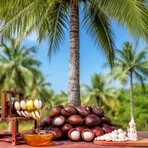
A tall palm tree from northern Brazil whose hard nuts produce oil and a white, ivory-like material

A tall palm from northern Brazil with hard nuts that give oil and a material like ivory for carving

A tall palm from northern Brazil with hard nuts that give oil and a material like ivory
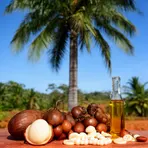
A tall palm from northern Brazil that makes hard nuts used for oil and carved like ivory

A tall palm tree from northern Brazil that has hard nuts with oil and a white core used like ivory
Surface Forms
Morphology
This is a botanical binomial composed of a genus name (Orbignya) and a species epithet (cohune), and both constituent terms refer to types of palm. A learner who knows those constituent meanings can transparently infer that Orbignya cohune is a particular kind of palm (a species producing large nuts and oil), so the overall meaning is directly derivable from the parts.
Etymology
Orbignya cohune may come from the scientist Orbigny and the local word cohune for the palm's large nut, so imagine Orbigny pointing at a heavy nut to help you remember it. That is why the name refers to a tropical palm with big, oil-rich nuts used for cooking, skin products and a hard 'vegetable ivory'.

