
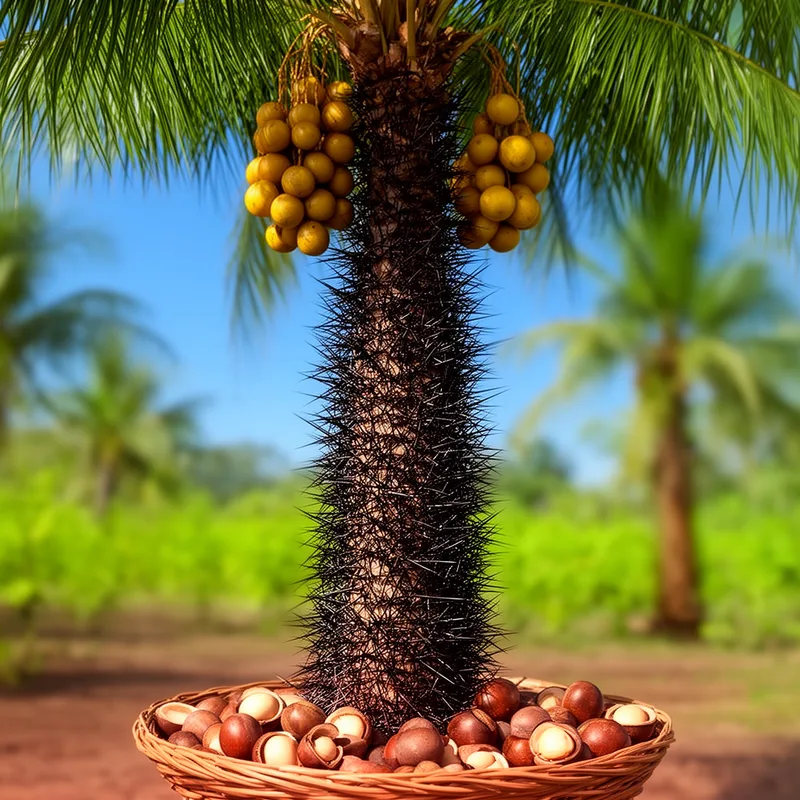
Acrocomia aculeata
- noun
- Specialized
- The Acrocomia aculeata is valued for its edible nuts and durable palm oil.
Examples
-
The spiny trunk of the Acrocomia aculeata deters many animals from climbing it.
-
The Acrocomia aculeata is native to tropical America.
-
Farmers in Brazil often plant Acrocomia aculeata to harvest its fruit for cooking.
-
Many farmers cultivate Acrocomia aculeata for its nuts.
-
Farmers in Brazil often plant Acrocomia aculeata to harvest its edible nuts for cooking.
-
The Acrocomia aculeata palm tree is known for its spiny trunk and nutritious fruit.
-
In tropical climates, the Acrocomia aculeata is a popular choice for those seeking palm oil.
Synonyms

A tropical palm with a thick spiny trunk and nuts you can eat
A tropical palm with a thick spiny trunk and edible nuts

A palm tree with a thick spiny trunk and nuts you can eat

A tropical tree with a swollen spiny trunk and edible nuts
Surface Forms
Morphology
Acrocomia + aculeata
This is a scientific binomial in Latin; its parts are taxonomic names rather than ordinary English words, and the second element ('aculeata') is not a common English word (and lacks a dictionary gloss here). A B1 learner who knows the listed constituents would not be able to derive 'a tropical American palm tree' from them because understanding requires botanical/Latin knowledge beyond everyday vocabulary.
Etymology
Acrocomia aculeata gives a clear picture: a tall tropical palm with a thick, spiny trunk and clusters of edible nuts. The second word, aculeata, means 'spiny', so the name helps you remember the tree by its sharp spines and useful nuts, which is why it is often called the 'macaw palm'.

