
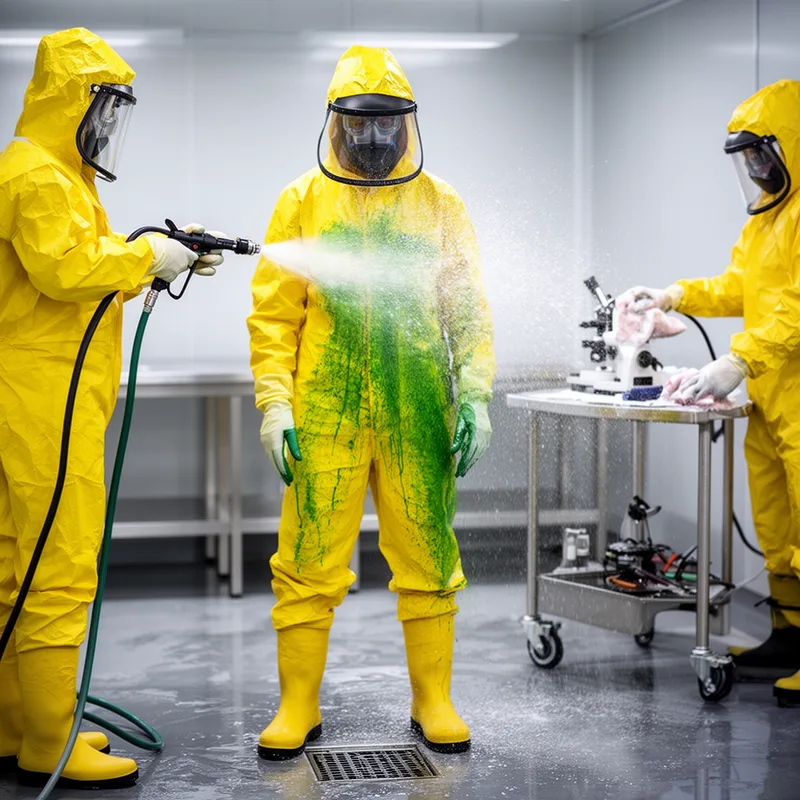
to decon

to decon

1 8.4
To remove dangerous substances from people, equipment, or areas
  • verb
  • /ˈdiːkɒn/
  • Jargon
translation icon : descontaminar
  • It is essential to decon the equipment after each use to ensure safety.

Examples

  • So decon out before it fails or you're in trouble.

    Fiction book (1993)
  • The team will decon the lab thoroughly before new experiments can begin.

  • Sergeant, General Ford has ordered us to decon all aircraft before takeoff.

    Fiction book (1995)
  • The crew arrived to decon the area after the chemical spill.

Synonyms

to flush out
vsto decon
51 4.5

Force unwanted people or things out of a place, often using water

is more thorough in removing hazardous chemical or biological agents
to purge
vsto decon
49 6.3

To remove unwanted substances, things, or people by cleaning

is narrower, focused on dangerous chemical and biological contaminants specifically
to wash away
vsto decon
33 2.1

Water or another liquid carries something away

is aimed at deliberate, thorough removal of hazardous contaminants
to purify
vsto decon
30 4.6

To remove dirt and bad chemicals from water or air to make them clean

is wider, targeting dangerous contaminants beyond simple impurities
to sterilize
vsto decon
  • Specialized
29 4.1

To make something like medical tools free of bacteria using heat or chemicals

is less about complete sterilization and more about broad hazardous removal
to filter out
vsto decon
20 3.8

To remove unwanted things from water, air, or lists by letting the rest pass

is more comprehensive, not limited to filtration methods
to disinfect
vsto decon
18 3.7

To clean a surface, wound, or tool with chemicals to kill germs

is broader, targeting all hazardous chemicals and agents, not only microbes
to strip
vsto decon
  • Specialized
15 6.3

Remove a substance or part from material like soil

is broader, aiming to eliminate hazardous agents, not just components
to fumigate
vsto decon
14 7.6

To treat a place with strong chemicals to kill pests and germs

uses any method to remove a wider range of hazardous substances thoroughly
to sanitize
vsto decon
  • US
11 3.7

Make something clean and free from bacteria

is more focused on removing hazardous chemical and biological threats
to wash out
vsto decon
9 2.0

Clean something using water to remove dirt or stains

focuses specifically on removing hazardous chemical and biological substances
to decontaminate
vsto decon
  • Specialized
9 7.0

To remove harmful substances from a place or thing to make it safe

focuses on thorough removal of hazardous chemical or biological agents
to clear off
vsto decon
8 3.0

Remove things from a surface to make it empty or clean

is concerned with safe removal of hazardous contaminants rather than tidiness
to detoxify
vsto decon
2 5.4

To remove harmful substances from something to make it safe

is broader, applying to many hazardous agents beyond toxins alone
to detox
vsto decon
2 3.9

To remove harmful things from the body by changing what you eat

applies to objects and places, not only bodily cleansing
to scavenge
vsto decon
  • Specialized
1 7.5

To remove harmful substances from water, air, or materials

is more focused on eliminating specific hazardous chemicals and biological agents
1 1.0

To remove dirt or mud from a surface

is more focused on eliminating dangerous chemical or biological agents
to degerm
vsto decon
7.4

Remove germs from something by cleaning or using a disinfectant

applies more widely to hazardous chemicals as well as microbes
to detoxicate
vsto decon
7.5

Take harmful substances out of something to make it safe

covers more than poison removal, including other hazardous contaminants
to deterge
vsto decon
  • Archaic
9.9

To clean a wound or the skin by washing away dirt and germs

is broader, not limited to bodily or medical cleansing situations

Antonyms

248 4.9

To make things like water or soil unsafe by adding harmful substances

How Thorough

to sterilize
  • Specialized
29 4.1
to decon
  • Jargon
1 8.4
to clean
1.0
to rinse
83 1.0

Surface Forms

decon infinitive
deconed past
deconed past participle
deconing present participle
decons third person singular

Etymology

Decon as a verb comes from decontamination, where de- means 'remove' and contaminate means 'make dirty', so to decon is simply to clean something of dangerous material. So when workers 'decon' their suits, they are removing harmful substances before they leave.