
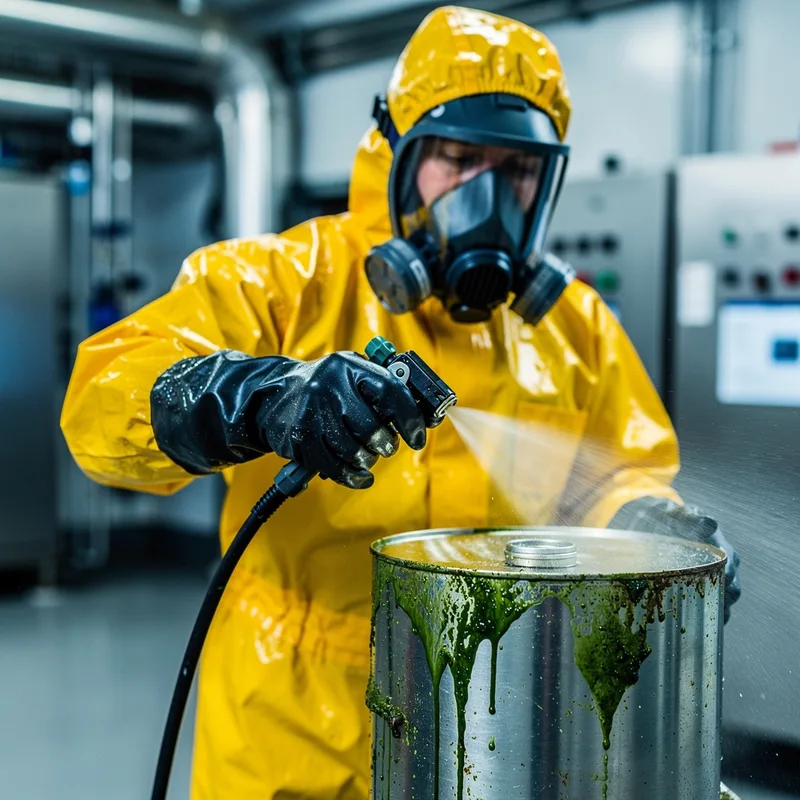
to decontaminate
 9
7.0
9
7.0

- verb
- /ˌdiːkənˈtæmɪneɪt/
- Specialized
- How much money will be needed if we have to decontaminate an area 1,000 times as big?
- materials to be decontaminated
Loading YouTube…
Watch on YouTubeHonestly, I'm sick of decontaminating my mail as well.
- Honestly, I'm sick of decontaminating my mail as well.
Examples
-
More than 20 families had to be evacuated while their homes were decontaminated.
Academic text (1997) -
The ship must be decontaminated.
-
Someplace where they decontaminate produce.
-
The school bus this student had taken to school was put into isolation and decontaminated.
Academic text (2002) -
Although no injuries were reported, the student had to be decontaminated, and 25 others were evacuated from the classroom.
Academic text (2002) -
After school officials were notified, approximately 88 people, mostly students, were decontaminated.
Academic text (2002) -
After water removal, all affected materials should be decontaminated by spraying with a disinfectant solution.
Academic text (1994) -
Students living in the dormitory were evacuated and housed in a local hotel while the dormitory was decontaminated.
Academic text (1997) -
The government sent a team to decontaminate the site after the chemical spill.
-
After the outbreak, the hospital urgently needed to decontaminate its emergency room equipment.
Synonyms
 49
6.3
49
6.3
To remove unwanted substances, things, or people by cleaning
 30
4.6
30
4.6
To remove dirt and bad chemicals from water or air to make them clean
 29
4.1
29
4.1
To make something like medical tools free of bacteria using heat or chemicals
 19
5.8
19
5.8
To make an acid or other chemical safe by a reaction
 18
3.7
18
3.7
To clean a surface, wound, or tool with chemicals to kill germs
 14
7.6
14
7.6
To treat a place with strong chemicals to kill pests and germs
 11
3.7
11
3.7
Make something clean and free from bacteria
 2
5.4
2
5.4
To remove harmful substances from something to make it safe


 1
8.4
1
8.4
To remove dangerous substances from people, equipment, or areas

Take harmful substances out of something to make it safe

Remove germs from something by cleaning or using a disinfectant

To clean a wound or the skin by washing away dirt and germs
Antonyms

How Clean
- Specialized
29
4.1

- Specialized
9
7.0
18
3.7
∞
1.0
83
1.0
Surface Forms
Morphology
decontaminate = contaminate (transparent) = de + contamin + ate
For learners who know 'contaminate', adding the productive prefix 'de-' clearly gives the meaning 'remove contamination from'.
Etymology
Decontaminate breaks into de- meaning 'remove' and contaminate meaning 'make dirty or unsafe', so it means to take away dangerous substances to make a place or object safe. A helpful way to remember de- is like in defrost, where it means 'take away'.