

to decay
 14
6.3
14
6.3

- verb
- /dɪˈkeɪ/
- Specialized
- The electric current will decay over time if the circuit is not maintained properly.
- decay exponentially
- decay with time
- decay rapidly
Examples
-
When the experiment started, scientists needed to measure how quickly the charged particles would decay under specific conditions.
-
If you move it, the core will decay in a matter of months.
-
So what happens is as it decays, the cells have less ability to hold the charge.
-
On the other hand, the radiation shielding may decay if not protected from the heat.
Fiction book (1999) -
Over time, plutonium decays into the uranium it was made from.
Academic text (2011) -
The unstable nucleus will radioactively decay to a stable species of isotope.
Academic text (2005) -
Within a few million years, the radioactive isotope decays away, and the comet begins to cool.
Academic text (1996) -
All isotopes of uranium are unstable, spontaneously decaying to lighter elements, accompanied by the release of energy.
Academic text (2002) -
The isotope decays predictably.
-
As the radioactive material sat untouched, it began to decay gradually, releasing energy in the process.
Synonyms
 531
1.2
531
1.2
To slowly become less visible, bright, or loud
 93
4.0
93
4.0
An effect or feeling that becomes less strong and then stops
 83
4.2
83
4.2
Gradually make someone's trust, belief, or support weaker over time
 72
5.1
72
5.1
To become smaller or less in number over time
 69
3.0
69
3.0
To become weaker and then disappear over time
 29
6.0
29
6.0
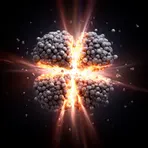
Break into smaller parts by losing energy in a physical process, for example in an atom
 19
4.3
19
4.3
To become less in amount or quality
 8
4.2
8
4.2
To become quieter and then stop
 1
4.6
1
4.6
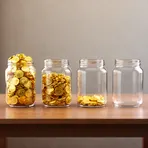
Slowly get smaller in number or amount until nothing remains
Antonyms
Compounds

- Specialized
5
2.2
Damage to a tooth's hard surface caused by bacteria that often makes a hole


- Specialized
 1
6.8
1
6.8
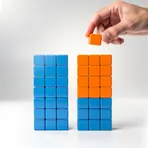
A decrease where an amount falls by the same part over equal times, becoming much smaller over time

- Specialized
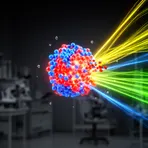
A radioactive process where a large atom sends out an alpha particle and becomes another element
How Fast

Surface Forms
Etymology
Decay comes from Latin parts de- 'down' and cadere 'to fall'. So when an electric charge or current decays, it simply 'falls' or goes down over time.