

to chew off
 3
3.5
3
3.5

- phrasal verb
- /tʃuː ɔf/
- He's got one eye missing, and half of his left antenna has been chewed off.
- chew off his leg
- chew off my arm
Examples
-
She chewed off a bite of the chewy steak and smiled.
-
Looks like it's been chewed off.
-
My Guinea pig just chewed off this massive lock of hair.
-
It looks like it was chewed off.
-
The dog chewed off the corner of the sofa leg.
-
He chewed off the plastic cover of the new toy.
Synonyms
 768
1.0
768
1.0
To use the teeth to cut, grip, or tear something
 45
3.4
45
3.4
To remove something by cutting, often with a sharp blow
 41
2.7
41
2.7
To take something off from where it is attached
 30
3.2
30
3.2
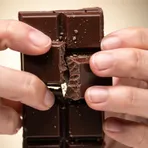
Bite or chew something again and again to make it smaller
 28
2.8
28
2.8
To make a piece come away from something by hitting or bending it
 12
3.0
12
3.0
To pull something off quickly until it rips
 12
2.1
12
2.1
To remove a piece from something using the teeth
 9
4.3
9
4.3
Pull things away one at a time
 9
3.5
9
3.5
To break a piece from something with a quick, sharp movement
 9
4.6
9
4.6
To cut a part from something with one quick move
 3
3.2
3
3.2
Break a small piece from something by hitting or pressing it

Cut off small parts by pinching or snipping
Antonyms
How Forceful

Surface Forms
Morphology
The meaning 'to remove, detach, or separate by biting' is directly and transparently derivable from 'chew' (to bite/gnaw) combined with the particle 'off' (indicating removal or separation). This verb+particle compositional pattern is common in English (and found in many languages), so a B1 learner who knows both constituents will readily infer the MWE meaning.
Etymology
The verb chew off comes from the image of using chew, your teeth, to bite through something until it comes off. So it means 'to remove by biting'.