

to gnaw
 30
3.2
30
3.2

- verb
- /nɔ/
- The puppy likes to gnaw on his favorite chew toy all day long.
- a rat gnawed
- a gnawed tree
- animals gnaw
Loading YouTube…
Watch on YouTubeWas the Chief like had a gruff beard, a gruff voice, and was he like gnawing on a chicken leg?
- Was the Chief like had a gruff beard, a gruff voice, and was he like gnawing on a chicken leg?
- What blind, gnawing, mandibled head was chewing up the silken thread we thought would guide us back to bed?
Examples
-
When this food supply was exhausted, the hungry mice gnawed tree bark, suppressing forest recovery and diversity, studies found.
Academic text (2010) -
The once sharp edge looked like it had been gnawed by small teeth.
Academic text (2007) -
It's been basically gnawed apart.
-
So one of them currently is gnawing on a bone in the background.
-
I thought I got them all, but it looks like they gnawed right through your wire there.
-
When I got home, Spot was sitting on the porch gnawing on a soup bone.
Fiction book (1991) -
Small groups of people sit around it, gnawing on the roasted flesh.
Fiction book (1993) -
Some people were gnawing on cold chicken and cold fried pork chops.
Academic text (1998) -
Back at the village, the youth declared that there was a mouse gnawing at the root of the tree and an enormous toad blocking the well.
-
Museum curators rely on it to keep tiny beetles, moths, and other small insects from gnawing precious relics.
Academic text (1995)
Synonyms
 768
1.0
768
1.0
To use the teeth to cut, grip, or tear something
 56
2.0
56
2.0
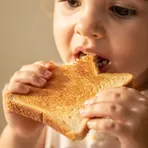
To eat small, gentle bites slowly or a little at a time
 43
2.6
43
2.6
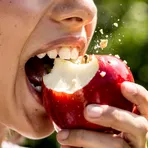
To chew food noisily, often making a crunching sound
 31
4.0
31
4.0
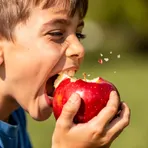
To bite or chew food loudly with big jaw movements
 14
2.9
14
2.9
To eat something while chewing loudly and enjoying it
 5
3.9
5
3.9
To damage something badly, often by biting or tearing
 3
3.5
3
3.5
To bite something until it comes off
 2
7.9
2
7.9
To chew food by biting and grinding it with the teeth
 1
3.6
1
3.6
To chew your nails when you feel nervous

To bite or chew something many times until it wears away

To chew something slowly and repeatedly with small bites

To chew food with the teeth
Antonyms

Phrasal Verbs

How Hard

Surface Forms
Etymology
Gnaw comes from an old English word gnagan that meant 'to bite', and the word even sounds a little like the action of teeth working on something. So to gnaw is to bite or chew something again and again until it becomes smaller.