

to sponge up


 1
3.7
1
3.7
- phrasal verb
- /spʌndʒ ʌp/
- I used a cloth to sponge up the spilled juice on the table.
Examples
-
This is rice, which always, you know, sponges up that sauce.
-
I try to sponge up what's going on in the world from a from some sort of bird's eye view and I sponge up what I love about the world.
-
You should sponge up the water on the floor to prevent slipping.
-
After the rain, she grabbed a towel to sponge up the puddle in the hallway.
Synonyms
 217
3.0
217
3.0
To take in things such as liquid, light, or information
 22
4.3
22
4.3
To take in liquid or information
 13
2.6
13
2.6
To take in liquid completely like a sponge or cloth
 8
1.8
8
1.8
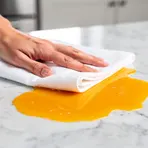
To clean a surface using a cloth or towel to remove a spill
 7
3.2
7
3.2
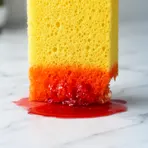
To soak up liquid or learn and keep new information
 5
2.6
5
2.6
To remove liquid or dirt from a floor with a cloth
 4
2.1
4
2.1
To clean up liquid by using a soft thing that soaks it up
 1
3.3
1
3.3
To absorb liquid using a sponge, cloth, or piece of bread

To remove liquid from a surface by wiping it with a cloth
Antonyms

How Much

Surface Forms
Morphology
The meaning 'to absorb or soak up' is directly built from the verb 'sponge' (to soak up/clean with a sponge) with the particle 'up' adding a sense of completion or intensification, so the overall sense is compositional. This verb+particle pattern is common and predictable, so a B1 learner who knows both constituents would readily infer the MWE meaning.
Etymology
The phrasal verb sponge up comes from the simple image of using a wet sponge to pick liquid up. When the sponge soaks and lifts the spill, it takes the liquid away, so the phrase means 'to absorb' or 'to soak up' something.