

to recede
 29
4.8
29
4.8

- verb
- /rɪˈsiːd/
- Granted, domestic concerns would likely recede again if the diplomatic and security fronts heated up.
- began to recede
- power recedes
- ice recedes
Loading YouTube…
Watch on YouTubeAnd all other galaxies would have receded beyond our horizon.
- And all other galaxies would have receded beyond our horizon.
- However, as the ice recedes, guess what?
- While the rest of America has receded below replacement level.
- The risk has receded because he's been gone.
- That's where things are receding away from us with the speed of light.
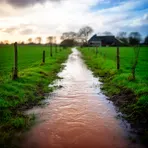
- Is somehow the flood was receding and so Noah sent a dove.
- And she has since receded into a historical anonymity.
- Autoimmune disease will flare and will recede and flare and recede, and it's kind of on cue.
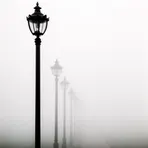
- Railway track receding into the distance.
- I'm going to do my campaign and then I'm going to recede and recuperate and recover, right?
- The camera looks through a doorway or an opening out into a rectangle of receding light.
- When you chant the word ohm, it actually helps your mind calm down, your thoughts recede and there's an instant feeling of peace and calm.
Examples
-
While the rest of America has receded below replacement level.
-
The incident with the Roc was already beginning to recede into the back corners of her mind.
Fiction book (1992) -
Lost and alone, Sarah feels all hope recede for herself and for humanity.
Fiction book (1991) -
Moreover, Britain continues to recede as an active agent in both Canadian and Australian history.
Academic text (1998) -
And we keep waiting for this issue to recede again into the background, but it hasn't.
-
Obviously, a lot of pricing pressures are receding, but not everyone is seeing them yet.
-
And all other galaxies would have receded beyond our horizon.
-
The faces of his platoon recede, and he is alone, singing in the cavern.
Fiction book (1995) -
And as they do, our autonomy recedes even while the imagined scope of our autonomy grows.
-
As the floodwaters began to recede, the community started to clean up the debris left behind.
Synonyms
 531
1.2
531
1.2
To slowly become less visible, bright, or loud
 466
2.8
466
2.8
To stop taking part in a place or activity
 283
1.7
283
1.7
To step away to an earlier place
 235
4.0
235
4.0
To move back from a place or plan to avoid danger
 162
3.4
162
3.4
To move yourself and things backward from a place, person, or situation
 86
3.5
86
3.5
To move away from people or a place to create space
 72
5.1
72
5.1
To become smaller or less in number over time
 69
3.0
69
3.0
To become weaker and then disappear over time
 57
3.7
57
3.7
To move back to a safer place when facing danger
 53
3.8
53
3.8
Move away from people to a quieter place
 48
6.4
48
6.4
To become less in size, amount, or strength
 48
6.8
48
6.8
To make something spread out and disappear, for example fog or tension
 47
4.8
47
4.8
Become less strong, as with pain, noise, or excitement
 46
2.7
46
2.7
To become less strong or loud over time
 34
2.8
34
2.8
To make something smaller in amount or strength
 23
6.8
23
6.8
To become less strong or severe and to make something do the same
 19
4.3
19
4.3
To become less in amount or quality
 9
4.0
9
4.0
To become gradually less strong or severe
 9
5.6
9
5.6
To slowly become weaker and then stop
 9
7.9
9
7.9
To make something weaker, like sound or light
 9
4.5
9
4.5
To become smaller or weaker over time until it stops
 8
4.2
8
4.2
To become quieter and then stop
 4
4.1
4
4.1
To move backwards away from something because of fear or surprise
 2
3.3
2
3.3
To become less over time
 1
4.6
1
4.6
Slowly get smaller in number or amount until nothing remains
 1
5.6
1
5.6
To move back slowly, like water leaving a shore
 1
5.1
1
5.1
To become slowly smaller or less until almost nothing remains
 1
4.0
1
4.0
To move back from a place or position, often to a safer spot
 1
7.3
1
7.3
To become less strong or less tight
To flow back or become less strong slowly
Antonyms

How Far

Surface Forms
Etymology
The word recede comes from the Latin parts re- 'back' and cedere 'to go', so it means 'to go back'. Think of proceed 'to go forward' as the opposite; that's why recede is used for something that moves back or becomes less strong.