

to attenuate
 9
7.9
9
7.9

- verb
- /əˈtɛnjuˌeɪt/
- Specifically, cannabidiol (CBD) is increasingly understood as a cannabinoid that may attenuate some of THC's adverse effects.
- attenuated vaccine
- live attenuated
- substantially attenuated
Loading YouTube…
Watch on YouTubeDoes it reduce risk factors and does this attenuate the contagion?
- Does it reduce risk factors and does this attenuate the contagion?
- What that means is your heel pad is there designed to attenuate the loads of walking, not running.
- Photons either scatter or attenuate, or they don't, and you can't stop them all.
- We're just going to attenuate the, the main podcast a little bit so that we can make our podcast, we can produce more meaningful creations.
- Software that might attenuate or reverse age-related cognitive impairment specifically related to various aspects of of attention.
- And you find very swiftly that it, that it gets it, it it dissipates, it attenuates, it gets, it gets easier to, to deal with by the minute.
- Were we to be able to intervene during those years of life, we might attenuate for some and God knows, maybe even prevent for others.
Examples
-
Previous studies of aspirin-sensitive asthma patients have also shown that antileukotriene agents attenuate asthma-associated bronchoconstriction.
Academic text (1999) -
The doctor prescribed medication to attenuate the patient's severe pain.
-
Does it reduce risk factors and does this attenuate the contagion?
-
Were we to be able to intervene during those years of life, we might attenuate for some and God knows, maybe even prevent for others.
-
So there's something about giving and being of service to others that seems to attenuate stress.
-
Time passage might be predicted to attenuate the effect of initial behavioral experience.
Academic text (1992) -
Tree height of the total treatment attenuated to levels comparable to that of the control treatment by age 20.
Academic text (2017) -
So education does attenuate belief in conspiracy theories and pseudoscience and things like that.
-
We stood there until the rain attenuated to a dense haze that hung between us.
Fiction book (1999) -
Not surprisingly, ROS scavengers have been shown to attenuate ROS-induced cell damage and death.
Academic text (2008)
Synonyms
 802
1.0
802
1.0
Make something go down in position, amount, or strength
 325
2.0
325
2.0
To make something smaller in amount or size
 305
2.8
305
2.8
To make people and things less strong or effective
 201
3.7
201
3.7
To become less in size, importance, or value
 181
2.8
181
2.8
Become less in amount or value
 162
2.1
162
2.1
To make something weaker or in a worse state
 72
5.1
72
5.1
To become smaller or less in number over time
 61
5.1
61
5.1
To make something worse or less able to work
 55
1.3
55
1.3
Become soft or make something soft
 48
6.4
48
6.4
To become less in size, amount, or strength
 44
3.7
44
3.7
To make something less strong, for example a sound, color or feeling
 38
1.4
38
1.4
To become less thick or crowded, for example a crowd
 34
2.8
34
2.8
To make something smaller in amount or strength
 28
3.5
28
3.5
To make a liquid weaker by adding water
 23
6.8
23
6.8
To become less strong or severe and to make something do the same
 20
4.6
20
4.6
To make someone feel less confident or important
 16
4.4
16
4.4
Make something less strong or noticeable, for example sound and feeling
 10
5.1
10
5.1
To make a list or group smaller by removing items over time
 10
8.8
10
8.8
To make something weaker or less effective
 4
4.1
4
4.1
To make a feeling, sound, or action less strong
 3
5.5
3
5.5
To make a feeling, sound, or pain less strong
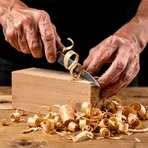 3
5.9
3
5.9
To make something smaller gradually by cutting or wearing it away
 2
3.7
2
3.7
Make a drink weaker by adding water or another liquid
 1
9.9
1
9.9
To make people or forces fewer and weaker by slow, steady pressure

To make air or other things thinner so they have more empty space
Antonyms


How Reduced

Surface Forms
Morphology
attenuate = tenuate (semi-transparent) = at + tenu + ate
Formed from Latin ad- (assimilated to 'at-') + a root corresponding to 'tenu-' meaning 'thin'; the base 'tenuate' exists but is rare, so the relation is not fully transparent to average learners.
Etymology
Attenuate comes from the Latin parts ad- ('to') and tenuis ('thin'), and it originally meant 'to make thin'. So, as a verb it now means to make something weaker, less strong, or less intense.