

to deaden
 3
5.5
3
5.5

- verb
- /ˈdɛdən/
- His voice relieved that freezing, gnawing fear that was creeping through his heart and slowly deadening his muscles.
- deadened the soul
Loading YouTube…
Watch on YouTubeBut may in a population type of setting swing things enough so that we can we can deaden the blow of of the pandemic.
- But may in a population type of setting swing things enough so that we can we can deaden the blow of of the pandemic.
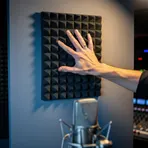
- Now you can also work with putting some moon gel on it or some tape if you want to deaden the ring a bit.
Examples
-
The overly cerebral approach to life, he keeps telling us, deadens our purest, most holy capacity to live life fully.
Academic text (1992) -
It deadens pain, makes the patient feel fine.
-
Now you can also work with putting some moon gel on it or some tape if you want to deaden the ring a bit.
-
We realize we fall into anger easily, so we create a program that deadens our anger.
Blog text (25) -
Gulps of vodka deadened the pain in Milton's finger.
Fiction book (1990) -
"There's no time for this," he said in a deadened voice, seizing Jezzle by his elbow and dragging him to his feet.
Fiction book (1995) -
It was scientifically controlled so that the nerve ends were deadened while Mr. Parker remained clear-headed and clinical with razor-sharp reflexes.
-
When the blast of the counselor's whistle pierced our eardrums, deadening the drone of mosquitoes, we'd plunge into the lake.
Fiction book (2000) -
The medication is designed to deaden the pain during the procedure.
-
She tried to deaden her emotions after the breakup by avoiding sad songs.
Synonyms
 305
2.8
305
2.8
To make people and things less strong or effective
 201
3.7
201
3.7
To become less in size, importance, or value
 61
5.1
61
5.1
To make something worse or less able to work
 44
3.7
44
3.7
To make something less strong, for example a sound, color or feeling
 34
2.8
34
2.8
To make something smaller in amount or strength
 33
3.4
33
3.4
Cause something to become less sharp, strong or bright
 26
4.8
26
4.8
To make a sound or feeling less strong
 23
6.8
23
6.8
To become less strong or severe and to make something do the same
 21
4.2
21
4.2
To make a feeling or pain less strong
 20
7.7
20
7.7
To make a person, animal, or thing weak and less able to work
 16
4.4
16
4.4
Make something less strong or noticeable, for example sound and feeling
 11
5.8
11
5.8
Make something less fun or exciting
 9
7.9
9
7.9
To make something weaker, like sound or light
 5
5.7
5
5.7
Reduce the strength of feelings or public anger
 2
4.9
2
4.9
Make someone feel less happy and excited
 1
4.9
1
4.9
Become or make slower, for example the wind
 1
9.8
1
9.8
Make someone or something lose energy and stop working well

To make a place or group less lively and energetic
Antonyms



How Intense

Surface Forms
Morphology
Etymology
Deaden comes from the old English word dead plus the verb ending -en, the same ending you see in harden or brighten, so it literally means 'make dead'. That's why to deaden pain or energy is to take away life or force and make it 'less strong' or 'less lively'.