

to slacken
 1
4.9
1
4.9

- verb
- /ˈslækən/
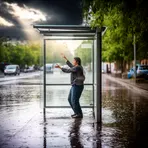
- The three of them sat silently in the car while outside the rain slackened and then stopped.
- slackened pace
- slackening demand
- slackened speed
Examples
-
When the excitement slackened, the people climbed back into their bench seats.
Fiction book (1993) -
It's hard to imagine that this trend is the result of slackening oil production.
Blog text (24) -
During World War I, however, production slackened because of the absence of men.
Academic text (1993) -
To Bill's credit, the car only slackened speed for a moment.
Fiction book (1996) -
But since 1992, as China experiences its current economic boom, the central government's attention to environmental concerns has slackened.
Academic text (2006) -
The growth rate slackened during the 1980s to 28 percent from a peak of 44 percent in the 1970s.
Academic text (1990) -
Prices on the stock market softened this afternoon from readings earlier in the day as the pace of trading has slackened.
-
At midday, the wind was about 25 knots, but it has slackened to about 15 knots at sunset.
Blog text (7) -
Although the Martian rampage seemed to have slackened somewhat, the city's attitude of sang-froid was melting rapidly into frothy panic.
Fiction book (1996) -
As the sun began to set, the wind slackened, providing a calm to the beach.
Synonyms
 957
1.0
957
1.0
Make something move or happen at a lower speed
 687
1.4
687
1.4
To move or act more slowly
 57
3.7
57
3.7
To make something less strong or strict
 48
6.4
48
6.4
To become less in size, amount, or strength
 34
2.8
34
2.8
To make something smaller in amount or strength
 26
3.2
26
3.2
To make rules less strict
 16
4.4
16
4.4
Make something less strong or noticeable, for example sound and feeling
 14
4.1
14
4.1
Make something, like a taste, sound, or plan, less strong
 10
5.5
10
5.5
To slow down
 8
2.7
8
2.7
Move or make something move less quickly
 4
4.1
4
4.1
To make a feeling, sound, or action less strong
 3
5.3
3
5.3
To reduce effort, speed or attention
 3
3.9
3
3.9
To become less strong or busy


 1
5.7
1
5.7
Move, act, or work less quickly and with less energy
To become less strong or active
Antonyms


Phrasal Verbs
How Intense

Surface Forms
Morphology
Etymology
Slacken also keeps the idea of slack ('loose') with the ending -en meaning 'to make', and a helpful way to remember this meaning is to think that when something goes slack it loses energy. So, to slacken can mean to slow down or become less active or strong.