
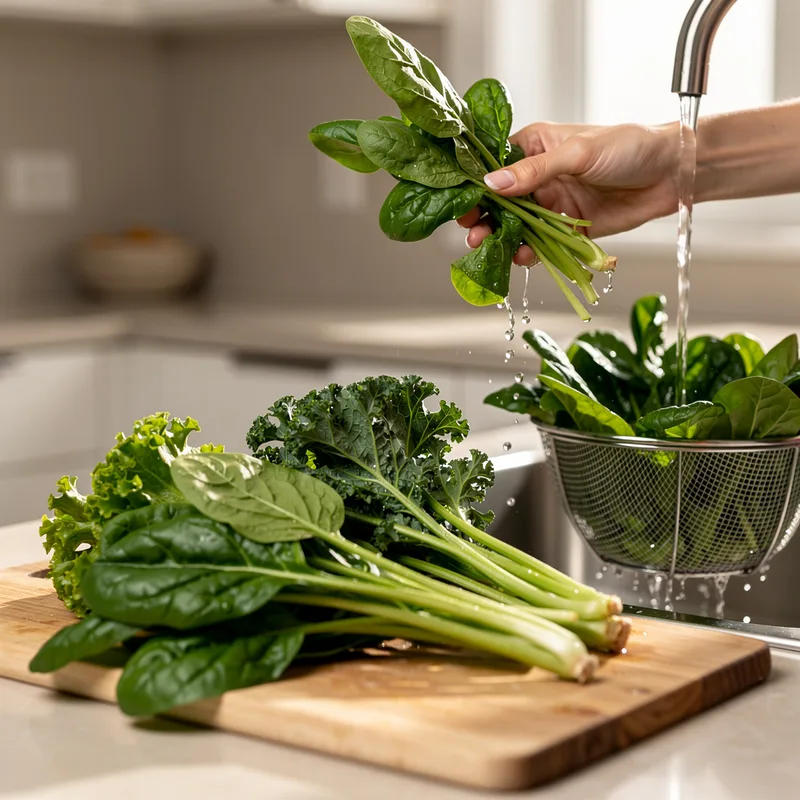
leafy vegetable
 2
1.9
2
1.9

- noun
- /ˈliːfi ˈvɛdʒtəbl/
- Kale and spinach are popular leafy vegetables that are rich in vitamins.
- green leafy vegetables
- dark leafy vegetables
- leafy vegetables like kale
Loading YouTube…
Watch on YouTubeAnd if you just increase the number of green leafy vegetables and colorful vegetables, your mood is better.
- And if you just increase the number of green leafy vegetables and colorful vegetables, your mood is better.
- Also green leafy vegetables, nuts and seeds and beans are also good sources of magnesium.
- Okay, that's what core lights in Chinese medicine, a lot of cooked green leafy vegetables, kale, Chard.
- And then also she mentioned building blood green leafy vegetables, beets, lots of red meat and organ meats.
Examples
-
Also green leafy vegetables, nuts and seeds and beans are also good sources of magnesium.
-
Other foods also known for their anti-inflammatory effects are fresh whole fruits, vegetables, olive oil, nuts, old-fashioned oatmeal, lean poultry, and dark leafy vegetables.
Blog text (25) -
A few years ago, I started eating purely meat and leafy vegetables, with some fruit.
Blog text (10) -
And if you just increase the number of green leafy vegetables and colorful vegetables, your mood is better.
-
Jeremy, congratulations on improving your blood work by eating pure meat and leafy vegetables, and sticking to it.
Blog text (10) -
L and Z are abundant in dark green leafy vegetables.
Academic text (2008) -
So spinach, kale, you know, things that are dark green leafy vegetables are very high in magnesium.
-
A healthy scalp can equate to healthy hair too, so eat lots of fruits and vegetables and other foods that are rich in vitamins A, B, and C, like tomatoes, apples, and green leafy vegetables.
Blog text (23) -
This means eating the rainbow, the green leafy vegetables, the brightly colored fruits and berries, fatty fishes, nuts, beans, olive oils.
-
They aren't the richest vegetable source of calcium—kale and other leafy vegetables are, Grusak says.
Academic text (1994)
Synonyms
 545
1.0
545
1.0
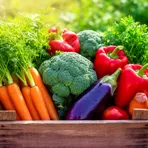
A plant or plant part eaten as food, usually not sweet
 95
1.0
95
1.0
Leafy vegetables like spinach or kale that you eat
 94
1.0
94
1.0
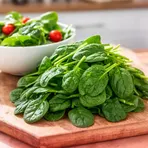
A green leafy vegetable eaten raw or cooked
 93
1.0
93
1.0
A leafy green vegetable often eaten raw in salads
 73
1.0
73
1.0
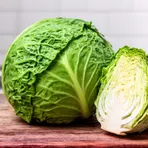
A round vegetable with thick leaves eaten raw or cooked
 70
1.0
70
1.0
A green vegetable with long crisp stalks eaten raw or cooked
 43
3.0
43
3.0
A plant food like a carrot or lettuce that you eat
 43
2.4
43
2.4
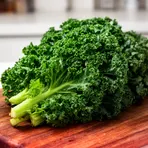
A hardy green vegetable with curly leaves like cabbage
 22
5.7
22
5.7
A leafy green plant with slightly spicy leaves often used in salads
 14
7.9
14
7.9
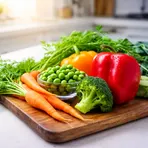
A part of a plant that people eat, for example carrots and peas
 11
1.0
11
1.0
Leaves and stems of plants like spinach or kale eaten as vegetables
 8
4.8
8
4.8
A leafy vegetable with large green leaves and thick stems eaten cooked or raw
 5
3.7
5
3.7
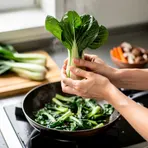
A leafy green vegetable like bok choy used in Asian cooking
 3
3.0
3
3.0
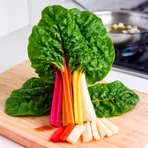
A leafy green vegetable with large leaves and thick colorful stalks
 2
2.5
2
2.5
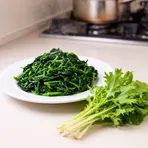
A plant food with green edible leaves like spinach or lettuce
 2
3.6
2
3.6
Leaves from a mustard plant that people eat cooked
 1
3.7
1
3.7
The leaves of young turnip plants that you cook and eat
 1
2.3
1
2.3
A type of lettuce with loose, curled leaves used in salads


 1
2.3
1
2.3
A vegetable with long pale green leaves and thick white stalks used in Asian cooking
 1
2.6
1
2.6
A round vegetable with wrinkled green leaves used in cooking
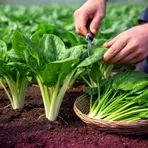
A leafy vegetable grown for its leaves and stalks instead of its root

A vegetable with large green leaves and thick stalks that people grow for its edible stems and leaves

A green leafy vegetable with spicy leaves used in cooking
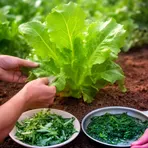
A plant with tender edible leaves often eaten raw or cooked

Young tender shoots and leaves of a climbing plant eaten as a vegetable

A plant you can eat
Antonyms
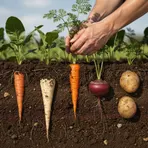
How Edible

Surface Forms
Morphology
The meaning 'plants with edible leaves' is directly and compositionally derived from 'leafy' (having many leaves) + 'vegetable' (edible plant); it follows a standard adjective + noun pattern so a B1 learner who knows both words will understand the phrase. This is a common, cross-linguistically transparent construction, increasing its predictability for learners.
Etymology
Leafy vegetable is a simple name that gives a clear picture: the part you eat is the leafy top of a vegetable. So it means 'plants with edible leaves and stems', like spinach or lettuce.