

to go up in smoke
 18
5.5
18
5.5

- idiom
- Informal
- After months of planning, the company's merger proposal went up in smoke when the board rejected it.
- plans went up in smoke
- life went up in smoke
- money went up in smoke
Loading YouTube…
Watch on YouTubeLike you actually have a career that's going up in smoke in front of your very eyes.
- Like you actually have a career that's going up in smoke in front of your very eyes.
Examples
-
Sooner or later, everybody's dreams go up in smoke.
-
Rasputin stares at the scene in his reliquary, watching his well-laid plan go up in smoke, and lets out a simmering growl.
Fiction book (1997) -
But unfortunately, all that hope has gone up in smoke.
-
The place is about to go up in smoke.
-
All the others had been left behind and had perhaps gone up in smoke.
Fiction book (1999) -
The greatest private art collection in North America was in danger of going up in smoke.
Academic text (2010) -
All our hard work just went up in smoke, like bubbles in water!
-
Well, thanks to John's little miracle the one bit of fun we had during the week just went up in smoke.
-
Just this past month, we saw 1,345 square kilometers of the Brazilian Amazon go up in smoke.
-
Or if they believe that the United States is not going to make good on its promises to build true democracy in Iraq, this whole reconstruction effort could go up in smoke.
Synonyms
 ∞
1.0
∞
1.0
To stop being seen or to no longer be there
 840
4.8
840
4.8
To stop being felt, as a feeling or idea
 579
3.9
579
3.9
To fall down suddenly, for example when a person faints or a building breaks
 421
3.0
421
3.0
Disappear suddenly and completely for no clear reason
 43
4.4
43
4.4
Fail because of money problems
 35
4.2
35
4.2
Break or fail because of pressure
 27
3.7
27
3.7
To be completely destroyed by fire
 21
7.5
21
7.5
An idea or hope that is suddenly ignored and can no longer happen
 19
4.0
19
4.0
To end without success, often in public like a show
 15
5.3
15
5.3
To fail completely and close, especially a business or project
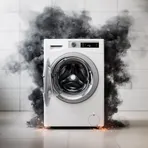 11
6.8
11
6.8
To stop working or fail completely
 9
9.9
9
9.9
To go very badly and fail completely
 8
4.4
8
4.4
To vanish suddenly with no trace
 7
7.9
7
7.9
Stop operating because it has run out of money
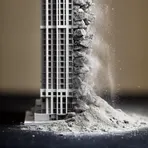 7
6.6
7
6.6
To be completely ruined and lose all value
 6
7.5
6
7.5
To fail suddenly after a good start
 6
4.6
6
4.6
Fail to produce any result
 4
5.6
4
5.6
To disappear or fall very quickly, for example when money loses value
 4
8.1
4
8.1
To die or stop working after a long time of problems
 2
8.6
2
8.6
To stop being used and disappear completely
 1
8.1
1
8.1
Disappear completely so no one knows what happened and no sign is left
 1
7.9
1
7.9
To fail completely

To fail completely and have no useful result

To stop working or to die after a long time of getting worse
Antonyms


Surface Forms
Morphology
The phrase maps a concrete image (something rising/vanishing in smoke) onto the abstract idea of plans or efforts being destroyed or disappearing, so a learner who knows 'go', 'up', 'in' and 'smoke' could likely infer a sense of disappearance or loss but may not recover the full nuance of 'fail completely/irretrievably' without exposure. Cross-linguistic parallels (e.g. French 'partir en fumée', German 'in Rauch aufgehen') make the metaphor somewhat transparent, but the idiomatic extension means the exact sense is not fully predictable.
Etymology
The idiom go up in smoke comes from the image of something burning: it turns into smoke and goes up, leaving nothing behind. So when plans 'fail completely' or 'disappear suddenly', we say they go up in smoke.