

to die
 840
4.8
840
4.8

- verb
- /daɪ/
- Our echoes die in that corridor now.
- old habits die
- the movement died
- die hard
Loading YouTube…
Watch on YouTubeThis proverb that hope dies last is not a proverb.
- This proverb that hope dies last is not a proverb.
- The passion never dies, it is reborn.
- Look, I've seen too many brilliant ideas die because of logistical fears.
- Energy doesn't die, you know, we can come back.
- But it all has to do with identity, meaning what dies, what dies.
- But I guess, as the famous saying goes, democracy dies in discussion.
- But don't forget, truth dies in darkness.
- Everything else grows from those or dies from those.
Examples
-
After months of inactivity, our hope for the project started to die away.
-
Does it bother you that a room dies every time you walk into it?
-
But are their dreams going to die this weekend?
-
And when they die out, so does the bar.
-
And every joke I had died, died.
-
I let it all die.
-
States in disarray rarely roll over and die; the Soviet experience stands almost alone in history.
Academic text (2011) -
Our colonies are dying.
-
Eventually, her tempest of misery began to die down to individual sobs and sniffs.
Fiction book (1990) -
The excitement of the crowd began to die as the game reached its conclusion.
Synonyms
 ∞
1.0
∞
1.0
To stop being seen or to no longer be there
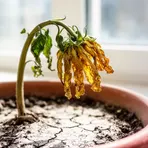 91
4.4
91
4.4
To become dry and weak, as with plants or feelings
 47
3.7
47
3.7
To stop existing over time, for example animals or traditions
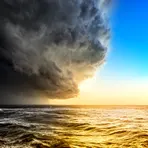 46
2.7
46
2.7
To become less strong or loud over time
 27
3.9
27
3.9
To stop working or become suddenly silent
 21
5.8
21
5.8
Plants or animals gradually become fewer until none remain
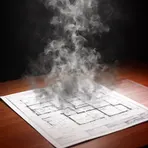 18
5.5
18
5.5
Plans or hopes suddenly fail and disappear for good
 15
4.5
15
4.5
Stop existing as a kind of animal, plant, or language
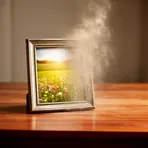 12
3.5
12
3.5
To slowly disappear or stop existing
 8
4.2
8
4.2
To become quieter and then stop
 7
5.5
7
5.5
To become weak and thin because of sickness or not eating enough
 7
6.6
7
6.6
To be completely ruined and lose all value
 4
8.1
4
8.1
To die or stop working after a long time of problems
 2
8.6
2
8.6
To stop being used and disappear completely
 1
8.1
1
8.1
Disappear completely so no one knows what happened and no sign is left
 1
8.2
1
8.2
To disappear completely because of neglect or bad weather

To stop working or to die after a long time of getting worse
Antonyms


Idioms








Phrasal Verbs



Compounds



- Informal
1
6.0
A time when someone must succeed or they will fail under great pressure


- Australian
A small bush from the tropics whose leaves fold when touched and that has sharp thorns

- Specialized
Work of designing, making, and fixing metal tools and forms used to make parts
How Fast

Surface Forms
Etymology
The verb die for a feeling, idea, or quality uses the same image: when interest or excitement 'dies' it slowly 'stops' like life fading away, so the word means to come to an end.