
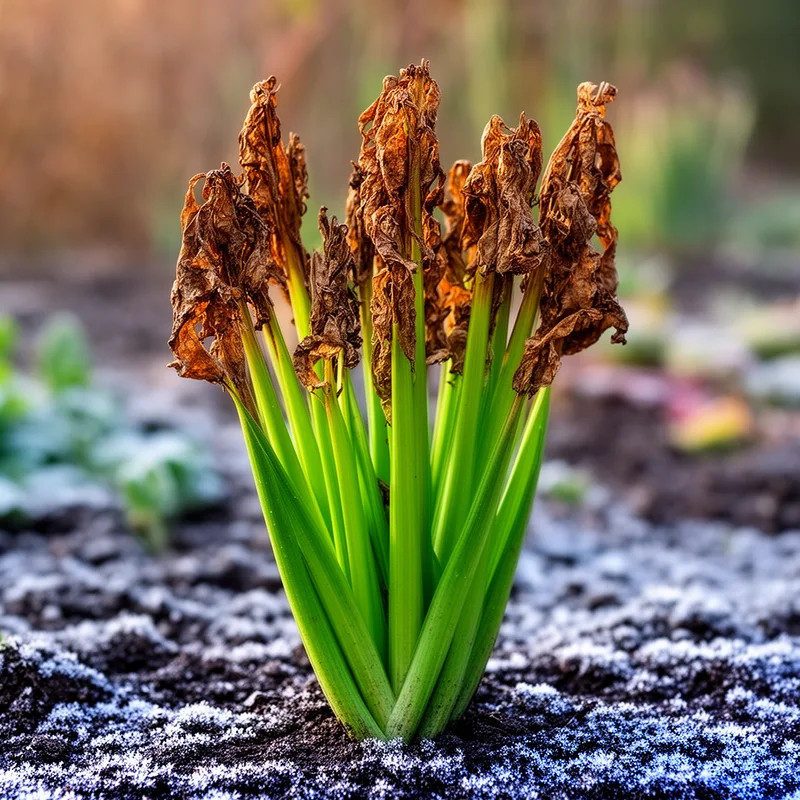
to die back
 1
6.7
1
6.7

- phrasal verb
- /daɪ bæk/
- Specialized
- When exposed to harsh winds, the tips of the young shoots tend to die back, affecting the overall growth of the plant.
- die back in winter
- foliage dies back
- leaves die back
Loading YouTube…
Watch on YouTubeNow the plant itself won't die back, but the top will die back.
- Now the plant itself won't die back, but the top will die back.
- So the plants start to die back is the fourth thing you look for.
- Otherwise each leaf that dies back forms a skin.
- They're starting to show signs of maybe starting to want to die back.
Examples
-
After a prolonged drought, many flowers began to die back, showing signs of stress and damage.
-
Now the plant itself won't die back, but the top will die back.
-
But most of those flowers have died back by this time of year.
Blog text (1) -
But in our case, they die back during our dry season and resurrect again when the heavy rains come.
Blog text (6) -
As with other comfreys, it will die back to the ground and go dormant in winter.
Blog text (6) -
I like the way the ferns have worked out here, but of course they die back in winter, which would make them unacceptable for many people.
Blog text (6) -
My garden died back for winter; the only things blooming were the pansies and one stubborn rose.
Fiction book (1996) -
When the plant dies back in autumn, it's time to dig them up and harvest the bumpy-looking, smoky-tasting roots.
Blog text (24) -
You can't see—and might not even remember—that really cool perennial you put in last spring that died back after it bloomed.
Blog text (5) -
In the cold winter months, the leaves of some plants will die back, leaving only bare branches.
Antonyms


How Damaged

Surface Forms
Morphology
die + back
The meaning is compositionally derived from 'die' (to stop living) plus the directional/retreat sense of 'back' (moving inward/away), so in a plant context it clearly denotes shoots/leaves dying from the outer tips inward. This is a standard verb+particle spatial pattern rather than an idiom, so a B1 learner who knows both constituents would generally be able to infer the intended meaning.
Etymology
Die back comes from the simple image of a plant whose leaves or shoots die at the tips and the damage moves back toward the stem. So it means 'to die starting at the tips and moving inward', as when garden plants lose their top growth after frost.