

to gnaw at
 7
6.1
7
6.1

- phrasal verb
- /nɔː æt/
- Doubt can often gnaw at a person's confidence, making them second-guess their decisions.
Loading YouTube…
Watch on YouTubeHe just, it just gnawed at his innards so much.
- He just, it just gnawed at his innards so much.
- To this day that gnaws at me.
- There is nothing that gnaws at the the pit of your stomach more than you know, retroactive regret, right?
- So live your life in a way, grab life by the the the horns of the bull, so to speak, and don't regret because that gnaws at your spirit.
- Well, I think we just talked about that it was getting over my competitive feelings and they were really gnawing at me.
Examples
-
Johanna fights back a wave of panic as fear gnaws at her self-confidence.
Academic text (2006) -
I imagine it will continue to gnaw at me until I actually sit down to write it.
Blog text (11) -
Day after day, two, three, four, without improvement, began to gnaw at me.
Academic text (1997) -
I hate that something is gnawing at you so deeply.
Blog text (12) -
But it's not that so much as the feeling of insignificance that gnaws at you.
Academic text (1999) -
Dave couldn't even feel the hunger gnawing at him anymore.
Fiction book (1990) -
The fear of failure began to gnaw at her resolve, causing her to hesitate before taking action.
-
Worries about the future continue to gnaw at his mind, disrupting his peace.
Synonyms
 83
4.2
83
4.2
Gradually make someone's trust, belief, or support weaker over time
 25
4.4
25
4.4
To damage something slowly over time, for example a building or a person's confidence
 18
4.6
18
4.6
Gradually make something weaker by repeated small actions
 14
7.1
14
7.1
Gradually make someone feel worse or less confident
 2
3.8
2
3.8
To slowly remove material by rubbing or long use
 2
6.8
2
6.8
To make someone feel more and more upset or angry inside

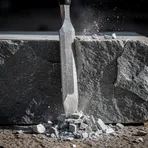
To bite or chew something many times until it wears away
Antonyms


How Damaging

Surface Forms
Morphology
gnaw + at
The verb 'gnaw' literally means to eat away slowly, and with the preposition 'at' it naturally targets something being affected. This metaphorical extension to feelings or confidence ('to gradually wear down') is directly derivable from the constituents and is a common cross-linguistic image, so a learner who knows the parts would understand it.
Etymology
Gnaw at comes from the image of a small animal slowly gnawing at a piece of wood or rope until it is worn away. So, when something gnaws at you, it slowly 'wears away' your confidence, peace, or courage.