

to get rid of
 ∞
1.6
∞
1.6

- phrasal verb
- /ɡɛt rɪd ʌv/
- To keep your room tidy, you should get rid of items you no longer use.
- want to get rid of
- help get rid of
- just get rid of
Loading YouTube…
Watch on YouTubeIt's to spit to expel, to get rid of, right?
- It's to spit to expel, to get rid of, right?
- OK, first book I'm getting rid of Cruel Prince.
- Okay, maybe I'll keep glazed doughnut and get rid of pillow talk.
- We're the greatest generation, we got rid of, you know, fascism.
- Now, if you'll recall, we got rid of social media.
- So I'm just wondering, why did you get rid of it for a while?
- I'm going to go in to get rid of any of these creases.
Examples
-
How far would she go to get rid of anything in her way?
Fiction book (1990) -
Seriously, get rid of those accounts on your feed.
-
You trying to get rid of me already?
-
And I know you were planning to get rid of me.
-
I was going to get rid of him.
-
We're going to get rid of his double chin.
-
I'm going to get rid of all of this stuff.
-
Let's get rid of some of this crap.
-
Bilbao is breaking with the past by getting rid of its material remains.
Academic text (1999) -
"We can't do anything until we get rid of some of that smell.
Fiction book (1990)
Synonyms
 ∞
1.5
∞
1.5
To move something or someone away from a place
 948
1.9
948
1.9
To remove something from a place or container
 502
3.4
502
3.4
Remove or kill something completely so it is gone
 477
1.8
477
1.8
To get rid of something you do not want, for example by putting it in the bin
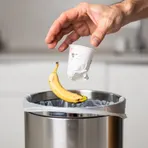 202
1.8
202
1.8
To put something in the trash because you do not want it
 189
4.2
189
4.2
Destroy something so nothing is left
 136
3.2
136
3.2
To remove something unwanted from a place
 131
3.5
131
3.5
To get rid of something you do not need
 130
2.7
130
2.7
To throw something away because you no longer want or need it
 91
3.1
91
3.1
Remove all things from a place so it becomes empty
 88
3.7
88
3.7
Remove something so it is no longer used
 85
6.6
85
6.6
Remove something harmful completely, for example a disease or pest
 60
6.9
60
6.9
To destroy something completely, often on purpose
 56
4.1
56
4.1
Deal with and finish a problem or task so it no longer causes trouble
 49
6.3
49
6.3
To remove unwanted substances, things, or people by cleaning
 41
3.6
41
3.6
Make something unwanted go away, like an illness, a feeling, or a person following you
 39
2.7
39
2.7
To throw away things you do not want
 37
3.8
37
3.8
To remove unwanted people or things from a group
 34
1.0
34
1.0
To throw away something you no longer want
 29
4.6
29
4.6
To make a feeling or idea go away
 27
6.1
27
6.1
Make a thought or feeling go away so it stops bothering you
 27
4.0
27
4.0
Remove an outside layer or covering from something to show what is under it
 24
6.3
24
6.3
To stop using something because you do not need it
 21
8.8
21
8.8
To remove all signs of something like a record or memory so it cannot be found
 21
5.5
21
5.5
End something completely, for example a custom or a debt
 10
3.6
10
3.6
Remove people completely from a place or group because they are unwanted
 10
1.8
10
1.8
To take things away from a place to make it tidy
 8
3.0
8
3.0
Remove things from a surface to make it empty or clean
 7
4.3
7
4.3
To make people forget and stop caring about something
 5
2.0
5
2.0
To throw something away because you no longer want or need it
 4
4.1
4
4.1
To throw away things you no longer want
 3
4.8
3
4.8
To get rid of something you do not want or need
 1
3.9
1
3.9
To destroy or carry something away completely, for example by water
 1
6.0
1
6.0
To reject or get rid of something no longer needed
 1
9.9
1
9.9
To destroy something completely, including its root
 1
7.5
1
7.5
To get rid of something unwanted, for example a bad habit or a weak branch


 1
5.0
1
5.0
To force someone to leave a place usually because they cause trouble
Antonyms

How Complete
85
6.6
 ∞
1.6
56
4.1
225
2.0
87
3.4
∞
1.6
56
4.1
225
2.0
87
3.4
Surface Forms
Morphology
get + rid + of
The sense 'to remove or dispose of' follows directly from combining 'get' (become/obtain) with 'rid' (make free from) plus the preposition 'of' — if a learner knows 'rid' as 'free from', they can infer that 'get rid of' means 'cause to be free of' or 'remove'. This compositional pattern has clear equivalents in many languages (e.g. Spanish 'deshacerse de', French 'se débarrasser de'), so the meaning is predictable for B1 learners who know the constituents.
Etymology
Get rid of may come from the simple image of taking something you do not want and getting it away so you are rid of it. That's why get rid of means 'to remove' or 'throw away' something unwanted.